
Commercial · Restaurants & Hospitality
Commercial Awnings and Patio Screens for Connecticut Restaurants: Extending the Outdoor Dining Season
Outdoor seats are the most profitable tables a Connecticut restaurant has — when the weather cooperates. The right shade and screen package turns a 12-week patio season into a 30-week one. Here is how operators are doing it.
The math on outdoor seats
Patio tables carry the same menu prices with a fraction of the buildout cost per seat, and in season they are often the first tables requested. The problem is that an unprotected Connecticut patio delivers maybe twelve reliable weeks: June bugs give way to July sun that drives guests inside at exactly the 5:30 seating, September evenings turn cold at 7, and one afternoon thunderstorm wipes out a Friday’s worth of covers.
Every one of those failure modes is a solvable environmental problem. Overhead sun is an awning. Wind, bugs, and sideways rain are zip-track screens. Shoulder-season cold is enclosure plus heaters. Operators who solve all three run patios from April to Thanksgiving, and the incremental revenue typically pays back the installation inside the first extended season.
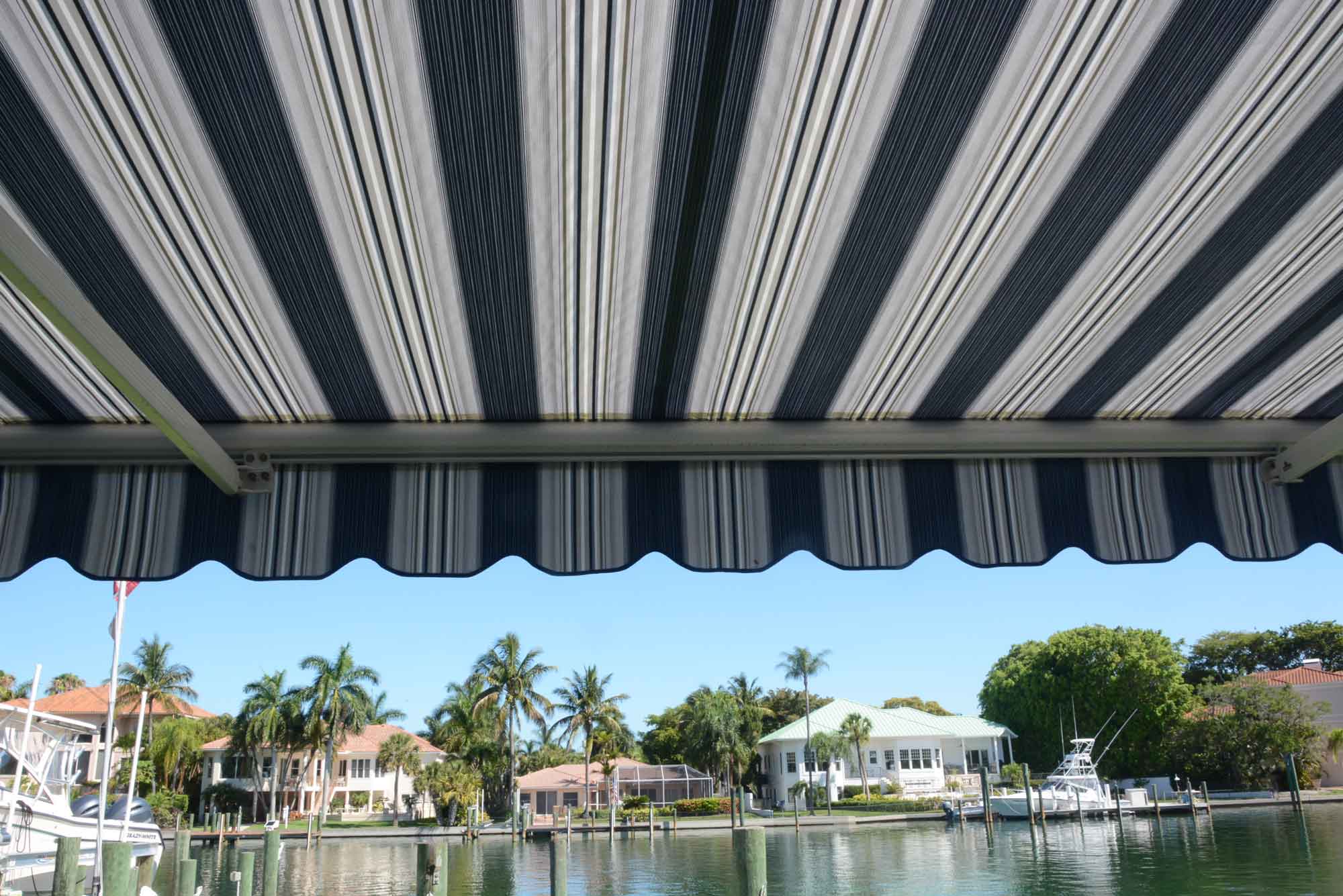
A retractable commercial awning shades the peak-sun hours and rolls away for open-sky evenings.
The three-layer commercial package
Branding is not an add-on — it is free advertising. A branded awning is signage your zoning officer usually treats as an awning, not a sign. Logo valances on a street-facing patio put your name in front of every car that passes, all season, with no recurring cost.
What Connecticut operators should budget
| Scope | Typical installed range | Notes |
|---|---|---|
| Storefront awning, branded | $4,000–$12,000 | Fixed or retractable; graphics included |
| Patio awning, motorized, 20–30 ft | $8,000–$18,000 | Wind sensor strongly recommended |
| Perimeter screens, per opening | $3,000–$6,500 | Clear vinyl or mesh; motorized |
| Full patio package, 3–5 openings + awning | $20,000–$50,000 | Phased installs are common |
Most operators phase it: awning first season, screens the next. The framework in our awning cost guide applies to commercial units at larger scale, and our screen cost guide covers perimeter pricing. For product depth, see motorized screens.
Permits, health codes, and practicalities
Awnings over public sidewalks need town approval in most Connecticut municipalities, and projecting signage rules vary block by block — we handle the drawings and specifications your building department asks for. Screens on private patios rarely require permits since nothing structural changes. If your enclosure becomes effectively a room, your fire marshal will care about egress and heater clearances; we design openings and specify hardware with that conversation in mind, because retrofitting egress after an inspection is the expensive order of operations.
One more operational note: commercial fabric lives a harder life than residential — grease-laden air, daily cycling, staff in a hurry. Specify commercial-grade acrylic or vinyl and plan a professional cleaning schedule; our fabric maintenance guide applies double for restaurants.
Frequently asked questions
How fast does a commercial awning project happen?
Measure to install typically runs 4 to 8 weeks depending on fabric and branding lead times, plus permitting where required. Winter orders install before patio season opens — the operators who call in January are the ones serving shaded lunches in May.
Can screens come down for a private event?
They retract at a button, individually or as a group. Many venues run screens down for weeknight service and fully open for weekend events — the flexibility is the product.
What happens in a storm?
Awnings auto-retract on wind sensors; screens either ride it out (zip-track systems tolerate significant wind) or retract in under a minute. Nothing is left to improvisation during a rush.
Do you work with breweries, clubs, and event venues too?
Yes — the same three-layer package fits taprooms, golf clubs, and event patios. Any business with outdoor square footage that weather takes away is the use case.
Serving Connecticut businesses statewide
How many covers is weather costing you?
A free site visit maps your patio’s sun, wind, and season against a shade package that pays for itself in extended service. Bring your seat count; we will bring the numbers.