
Door Screens · Mirage
Mirage Retractable Door Screens vs a Standard Screen Door
A standard screen door gets the job done for less. A Mirage retractable screen disappears when you are done with it. Here is how they compare and which doors deserve which.
Published November 2026
Short answer: A standard screen door usually costs less, but it swings or slides in front of the opening, can slam and stays in your view all year. A Mirage retractable door screen is custom-measured, glides on a track with fingertip control and retracts out of sight into a slim 2-inch housing. Choose a standard screen door for a rarely used door or a tight budget. Choose a retractable screen for a slider, French doors, a door you use every day, pets or a clear view.
Open a door in a Connecticut summer and you let in the breeze and the bugs together. The screen door has been the answer for a century, and for many doors it is still a perfectly good one. But a screen door is also something you look through, push around and slam, and for a patio slider or a pair of French doors the frame can take over the opening. That is the gap that retractable screens fill.
Shoreline Shade installs Mirage retractable door screens, and this guide compares them with a standard screen door the way we would at your kitchen table: what each one does well, where each falls short and which doors suit which. Mirage Screen Systems, the manufacturer, has made retractable screens since 1997 and describes its products on its official site.
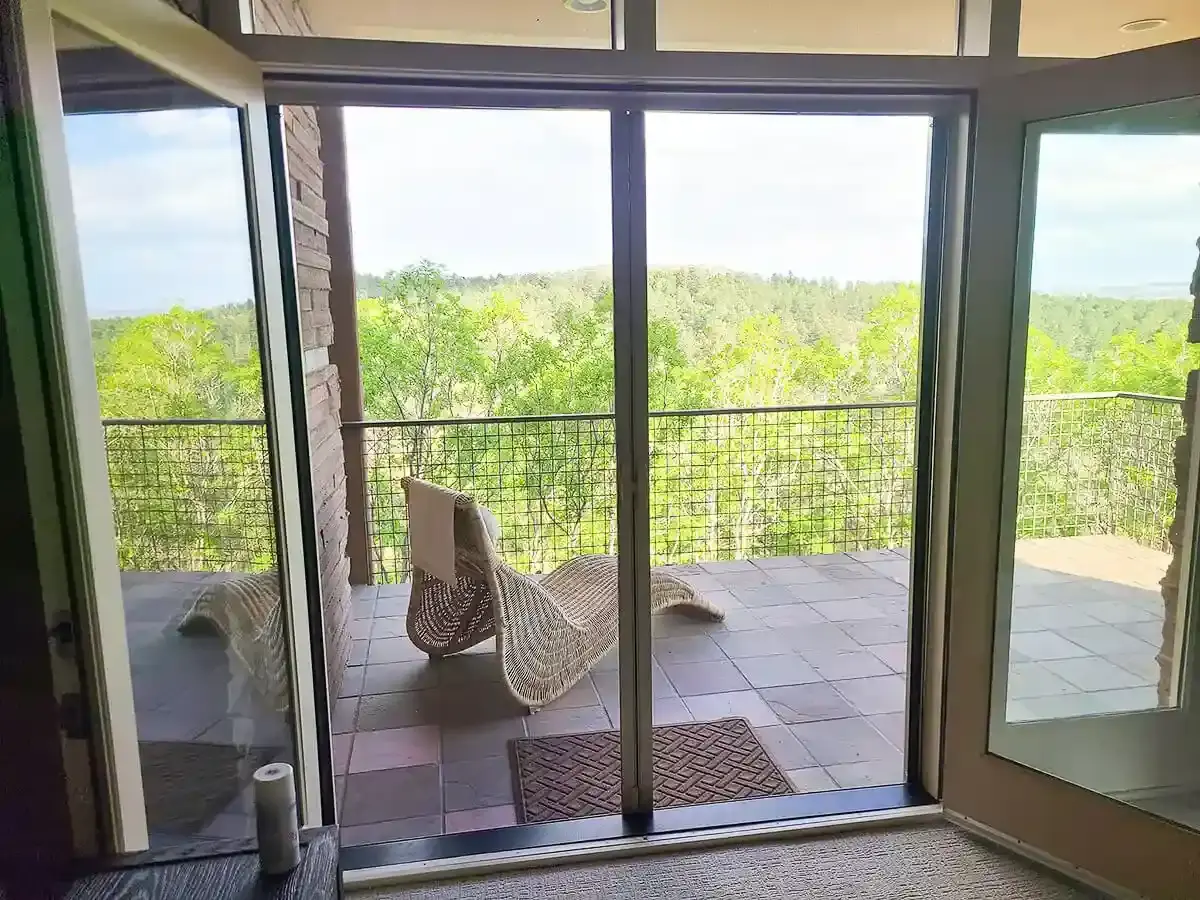
Looking out through glass doors with a retractable screen in place.
What is a standard screen door, and where does it fall short?
A standard screen door is either a hinged door that swings on the doorframe, usually on a spring or closer, or a sliding panel that rides a track beside a patio slider. It is simple, widely available and usually the lower-priced choice, which is why it is on so many houses.
The complaints are familiar. A hinged door swings into the space you walk through and can slam shut. The frame is in the view even when you are not using it. A sliding panel takes up half the slider opening and has to be lifted out or pushed aside. On French doors, a single hinged screen leaves one side blocked. Pets paw at the mesh, and a bent or torn panel is a repair or replacement job. None of this is fatal, which is why a standard screen door is still the right choice for some doors.
How does a Mirage retractable door screen work?
A retractable screen lives in a slim housing mounted to the door frame. When you want air you pull the screen across the opening, and when you are done it rolls back into the housing so the door looks like a door again. On Mirage screens, the housing is about 2 inches deep and blends with the door trim, and an internal speed reducer controls the retraction so the screen does not slam, pinch fingers or make noise.
Mirage lists heavy-duty aluminum and stainless-steel components, Teflon-infused tracks and brass wheels, and tests its screens to 250,000 cycles. The mechanical parts carry a limited lifetime warranty from Mirage. As with any warranty, ask for the exact terms in your written quote. You can read more on our Mirage door screens page.
Which doors can a Mirage screen fit?
- Sliding glass doors. A single or double screen covers openings up to 16 feet wide. This is the most popular application.
- French and double doors. Two screens pull from opposite sides and meet in the center with magnetic closures. Each side retracts independently, and they work for inswing and outswing doors.
- Single entry doors. A low-profile housing mounts flush to the frame, so you can open the front, back or side door for cross-ventilation and keep bugs out.
Every system is custom-measured and cut on site for a precise fit. If your opening is wider than a door, such as a whole patio, the better product is a motorized retractable screen that spans up to 25 feet in a single unit.
How do they compare side by side?
| Feature | Standard screen door | Mirage retractable screen |
|---|---|---|
| Fit | Stock or made-to-order frame in front of the door | Custom-measured and cut on site to your opening |
| When you are not using it | Frame and mesh stay in the view | Retracts completely out of sight into a slim housing |
| Operation | Swings or slides; often needs a closer or a push | Glides along a track with fingertip control and a controlled return |
| Slamming and noise | A hinged door can slam if the closer is strong or the wind catches it | An internal speed reducer gives a gentle, controlled retraction |
| French doors and wide sliders | Often one hinged panel, or a sliding panel that blocks half the opening | Double screens meet in the center on French doors; sliders up to 16 feet wide |
| Pets | Standard mesh can be pawed or clawed | A heavy-duty pet-resistant mesh is available |
| Price | Usually lower | Custom, quoted after a free on-site visit |
What mesh and colors are available?
Mirage screens come with a highly transparent charcoal insect mesh that gives a clear view and good airflow, or with a heavy-duty pet-resistant mesh that holds up to paws and claws while keeping visibility. The frame comes in eight standard finishes, including Polar White, Sandalwood, Slate Grey, Tudor Brown and Midnight Black, so you can match the trim, and we can discuss custom color matching. If a pet is the reason you are shopping, read our guide to retractable screens for pets and kids.
When is a standard screen door the better choice?
We would rather tell you than sell you the wrong product. A standard screen door makes sense when:
- The door is rarely used, such as a basement or utility door.
- You are renting or planning to sell, and you want the lowest-cost fix.
- The budget is tight and the doorway is a standard size.
- You prefer the look of a classic wood or aluminum storm and screen door on a front entry.
A retractable screen earns its price on the doors you use every day, on wide openings and where the view matters. Our retractable door screens guide goes through sliders, French doors and entries in more detail.
What happens at the estimate?
We visit, measure the opening, look at how the door swings or slides and show you mesh and color samples. You get a written quote, and we will match a competitor’s written quote for the same brand, size and specs. Our guide on what to expect at a free estimate lists what to have ready. We serve shoreline and inland towns across Connecticut, including East Lyme, Pawcatuck and Norwalk. See every town on our service areas page, and find more guides on our resources page.
Frequently asked questions
Can a Mirage screen fit a sliding glass door?
Yes. Sliding glass doors are the most popular application. A single or double retractable screen covers openings up to 16 feet wide.
What about French doors?
Double retractable screens pull from opposite sides and meet in the center with magnetic closures. Each side retracts independently, and they work for inswing and outswing doors.
Do you offer a pet-resistant screen?
Yes. Pet-resistant mesh is a heavy-duty option that holds up to paws and claws while keeping visibility.
Will a retractable screen slam or pinch fingers?
Mirage screens have an internal speed reducer that gives a gentle, controlled retraction, so there is no slamming, no pinched fingers and no noise.
How are Mirage screens fitted?
Each system is custom-measured and cut on site for a precise fit, and the low-profile housing mounts flush to your door frame.
How long does a Mirage screen last?
Mirage tests its screens to 250,000 cycles, and the mechanical parts carry a limited lifetime warranty from Mirage. Ask for the exact warranty terms in your written quote.
Can I keep a standard screen door on my front door and use Mirage on the slider?
Yes. Many homes use the right product on each door. A classic storm and screen door suits some front entries, and a retractable screen suits the slider or French doors where the view matters.
What does a Mirage door screen cost?
Every system is custom-measured, so the price depends on the door type, width and finish. We give you a written quote after a free on-site visit, and we will match a competitor’s written quote for the same brand, size and specs.
Ready to get rid of the slammer?
Tom will visit, measure your doors and show you Mirage mesh and color samples. The estimate is free, and we will match a competitor’s written quote for the same brand, size and specs.
Or call (860) 510-3862