
Outdoor Living · Connecticut Shoreline
Mosquito Season in Connecticut: Why Retractable Screens Beat Sprays, Candles, and Bug Zappers
Connecticut’s mosquito season now runs May through October, and the shoreline towns get it worst. Here is an honest comparison of everything homeowners try — and why a physical barrier is the only approach that actually gives you your porch back.
Why the shoreline gets it worse
The Connecticut Agricultural Experiment Station traps and tests mosquitoes at over 100 sites across the state every season, and the pattern is consistent: coastal and river-adjacent towns carry the heaviest populations. Salt marshes from Greenwich to Stonington breed Aedes sollicitans, the aggressive salt marsh mosquito that flies miles inland from where it hatched. Add the freshwater wetlands along the Connecticut River valley and the wooded ponds inland, and shoreline homeowners deal with more mosquitoes, for more of the year, than almost anyone else in New England.
That matters because the standard advice — dump standing water, run a fan — assumes your mosquitoes hatched in your yard. On the shoreline, many of them commuted in. You cannot drain a salt marsh, which is why source control alone never solves the porch problem here.
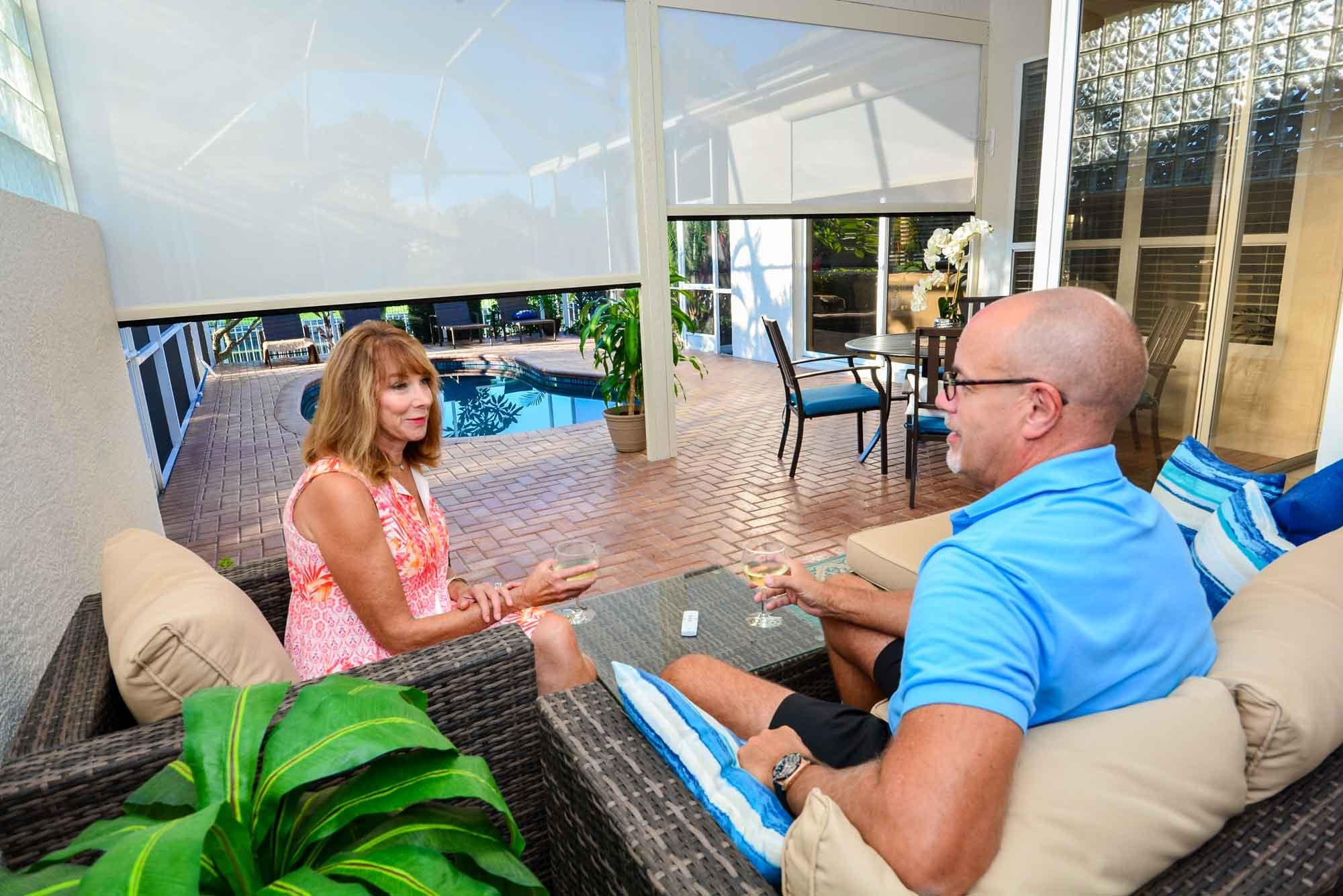
A zip-track retractable screen seals the entire opening — no side gaps, no bottom gap, nothing for a mosquito to find.
The honest rundown: what works and what does not
| Approach | Does it work? | The catch |
|---|---|---|
| Citronella candles | Barely | Studies show roughly a 40% reduction in landings within a couple of feet of the flame. Beyond that, nothing. |
| Bug zappers | No | They kill thousands of insects — almost none of them mosquitoes, which are not strongly attracted to UV light. Mostly they kill moths and beneficial insects. |
| DEET / picaridin sprays | Yes, on skin | Effective personal protection, but you have to apply it every time, it does nothing for your guests until they do too, and nobody wants to marinate in repellent for a quiet dinner at home. |
| Yard spray treatments | Partially | Knockdown lasts days to weeks, kills pollinators along with mosquitoes, and does nothing about the marsh breeders that fly in afterward. Recurring cost forever. |
| Fans | Somewhat | Mosquitoes are weak fliers, so a strong fan genuinely helps — within the fan’s airstream. Fine for one chair, not a dinner table. |
| Retractable screens | Yes, completely | Higher upfront cost. That is the entire list of downsides for a zip-track system. |
Everything above the last row manages the problem. A sealed physical barrier eliminates it. That is the fundamental distinction, and it is why screens are the only option on the list that changes how you actually use the space.
Why zip-track matters for insect protection specifically
Not all screens seal. A hanging mesh panel or a screen running in a simple open channel leaves gaps at the edges — and a mosquito needs a gap about the size of this letter o. Zip-track systems weld a polymer bead into the fabric edge that runs captured inside the side rails, so the mesh is sealed on all four sides when deployed: rails on the sides, housing at the top, weighted bar meeting the floor at the bottom.
For the full product breakdown — motors, mesh options, controls — see our motorized porch screens guide, and if you are weighing a screened enclosure against retractable, our screen room comparison walks through that decision.
Mesh choice tip: standard insect mesh stops mosquitoes. If your property backs onto salt marsh, ask about tighter no-see-um mesh, which also stops the biting midges that get through ordinary screening. The upcharge is small; deciding after installation means re-screening.
What it costs, honestly
A motorized zip-track screen for a single porch or patio opening in Connecticut typically runs $2,500 to $5,500 installed, depending on width, mesh, and motor spec. Multi-bay porches scale from there. Our full cost guide breaks pricing down by opening size and option.
Compare against the recurring alternatives: seasonal yard spraying runs $400 to $900 per year, forever, and manages the problem without solving it. A screen system is a one-time cost with a motor that lasts well over a decade, it adds usable square footage in the way an addition does, and it works on day one of every season without anyone lifting a finger except to press a button.
Frequently asked questions
Do retractable screens block the view and the breeze?
Insect mesh is nearly transparent at conversation distance and passes breeze freely — that is most of the point. You keep the open-porch feeling; the mosquitoes stay outside. Tighter meshes trade a little visibility for more protection.
Can screens enclose a patio that has no walls?
Screens need structure to mount to — posts, columns, or a pergola frame. A porch or covered patio is ideal as-is. For open patios, screens pair with a motorized louvered pergola; see our pergola guide for how that combination works.
When is the best time to have screens installed?
Late winter and early spring. Lead times stretch once the first warm week hits and everyone remembers last summer at the same time. Ordering in February or March means the system is running before the May hatch.
Do the screens help with anything besides insects?
Yes — solar mesh options cut heat and glare significantly, and any deployed screen adds evening privacy. Many clients end up using them as much for late-afternoon sun as for bugs.
Serving the Connecticut shoreline and beyond
Ready to take your porch back?
Shoreline Shade installs motorized retractable screens across the Connecticut shoreline. One visit, one measurement, and this is the last mosquito season that chases you inside.