
Awning Fabric · Color · Fading · Mildew
Which Awning Fabric Is Best for Connecticut? Solution-Dyed Acrylic vs Vinyl, Color, Fading and Mildew
The fabric is the part of a retractable awning you see every day and the part that takes the sun, rain, pollen and salt. Here is what the fabric choices really mean for a Connecticut patio, and what no fabric can do.
Short answer: For most Connecticut homes, solution-dyed acrylic is the better awning fabric. The color runs through the whole fiber instead of sitting on a coating, so it holds its color well in strong sun, it is breathable so it dries out, and it can be cleaned with mild soap. Vinyl-coated fabric is more waterproof but is a different tool. No fabric is fade-proof, mildew-proof or stain-proof, and care matters as much as the material.
By Shoreline Shade, LLC, Clinton, Connecticut · Last updated October 2026
In this guide
- What is solution-dyed acrylic awning fabric?
- How is vinyl awning fabric different?
- Does the color of the fabric change how hot it is under the awning?
- Will the fabric fade in Connecticut sun?
- What about mildew and mold on awning fabric?
- Salt, pollen and coastal air: does fabric choice matter?
- How do I choose a fabric color?
- Other fabric questions that come up
- Frequently asked questions
- Choose your awning fabric with real samples
What is solution-dyed acrylic awning fabric?
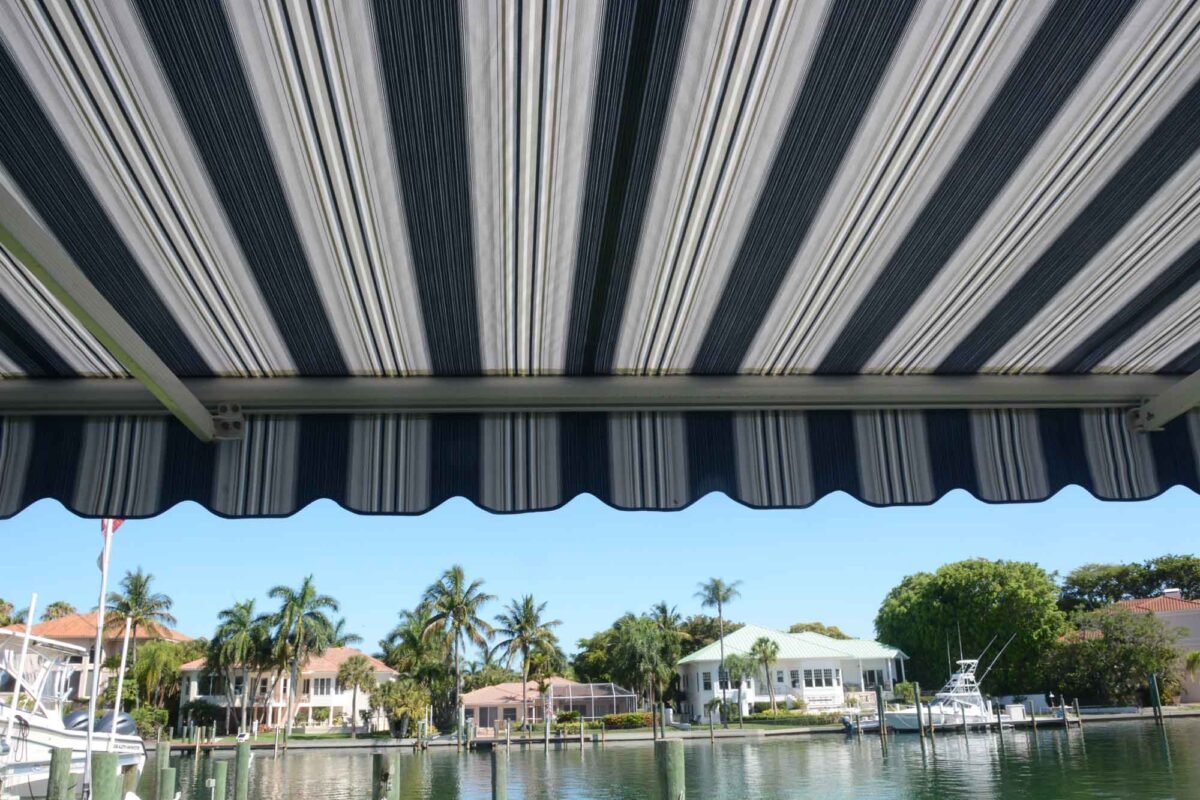
Most fabrics are dyed after they are made, so the color sits on the surface of the thread. Solution-dyed acrylic is different. The pigment is added to the liquid acrylic before it is spun into fiber, so the color runs all the way through each strand. You can think of it as the difference between a painted board and a board that is the same color all the way through. When the surface wears, there is still color underneath.
That is why solution-dyed acrylic is so widely used for outdoor fabric. Sunbrella is the best-known brand of it, and it is the fabric family on our SunPro retractable awnings. On our awnings page, we show 30+ Sunbrella fabrics in stock and 200+ more at sunbrella.com. Every Sunbrella fabric is solution-dyed acrylic, so within the range you are choosing color and pattern, not fiber type.
Solution-dyed acrylic is also breathable. Moisture can leave the fabric rather than being trapped in a coating. That matters in Connecticut, where an awning gets damp from morning dew, sea fog and summer thunderstorms and then dries in the sun.
How is vinyl awning fabric different?
Vinyl awning fabric is usually a woven polyester base with a vinyl (PVC) coating or laminate. The coating is what makes it waterproof, and the color is typically in or on that coating. It is common on commercial awnings and fixed frames.
Vinyl has real strengths. It sheds water and does not soak through, it is often lower in cost, and it is easy to wipe down. The trade-offs are the reason we do not recommend it for a motorized retractable awning on a home. A retractable awning rolls its fabric up tightly, and a coated fabric can crease and wear along those folds over time. Vinyl is generally less breathable, so water trapped in a closed cassette can stay put. And a coating can chalk or fade as it ages, which may show up as a dull, powdery surface rather than an even color change.
We do not sell vinyl-laminate awnings, so this is not a pitch. It is a comparison so you can understand quotes from other companies. If another bid is for a vinyl fabric and it is far cheaper, that may be why.
| Solution-dyed acrylic (Sunbrella) | Vinyl-coated polyester | |
|---|---|---|
| How color is made | Pigment goes through the fiber | Color in or on a coating |
| Water | Water-repellent finish; sheds light rain, but not a sealed membrane | Waterproof surface |
| Breathability | Breathable, dries out | Less breathable; moisture can stay trapped |
| Rolled in a cassette | Soft hand; designed to roll and unroll | Stiffer; can crease along folds |
| Cleaning | Brush, mild soap, rinse | Wipe with mild cleaner |
| Typical homeowner use | Retractable and motorized awnings | Fixed and commercial awnings, boat covers |
| Offered by Shoreline Shade | Yes | No |
Check your own quote. Ask what fabric is specified, who makes it, and what the manufacturer warranty covers and for how long. Get it in writing.
Does the color of the fabric change how hot it is under the awning?
Yes, a little, but it is not the main factor. The big difference is between having shade and not having it. Within shade, color changes a few things.
- Light colors such as linen, beige and cream reflect more sunlight and absorb less heat. They tend to feel brighter underneath, and some light passes through the fabric, which can make a patio feel airy.
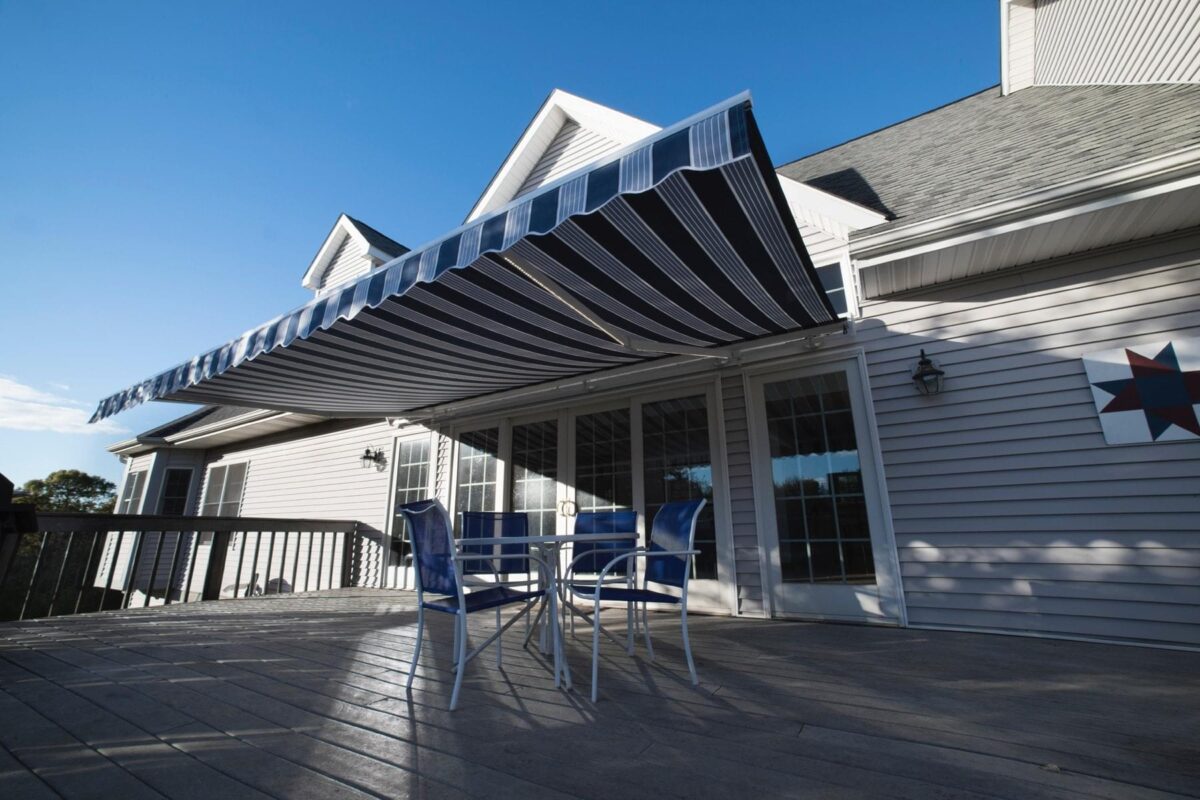
- Dark colors such as navy, forest green and charcoal absorb more heat in the fabric itself but block more light and glare, so they feel dimmer and calmer under the awning. The fabric warms up, but you are standing under it, not on it.
- Stripes and patterns split the difference and hide pollen, dust and small marks better than a solid.
Your house matters as much as the fabric. If the awning is mainly there to keep a hot, south- or west-facing room cooler, the benefit comes from stopping sun before it reaches the glass, which you get with any color. The U.S. Department of Energy’s report on window attachments is a good place to read about how exterior shading compares with interior options.
Pick the color you will be happy to look at. Heat differences between colors are real but modest, and they are easy to overstate. Our guide to cooling costs with awnings and exterior shades covers what shade actually does for a house.
Will the fabric fade in Connecticut sun?
Eventually, everything outdoors fades a bit, including solution-dyed acrylic. The difference is how and how fast. Because the color is part of the fiber, fading tends to be slow and even rather than patchy, and the surface does not peel or flake away. Dark and saturated colors tend to show fade sooner than neutrals, because a small loss of color is more visible against a deep shade. Reds, bright blues and deep greens are the hardest on the eye after years of sun.
Fade rates depend on color, exposure, the number of hours the awning is open, and your location. A south- or west-facing awning that is open every afternoon will age faster than one on a north wall. Retracting the awning when you are not using it, which a wind and sun sensor setup can do automatically, reduces exposure. See our guide on wind and sun sensors.
A fabric warranty is worth reading closely. Check what counts as fading, whether it is a number or a visual judgment, and what the warranty requires you to do for care. We will not quote warranty terms here, because they are set by the manufacturer and can change. Ask for the current terms when you request an estimate.
Honest limit: no awning fabric is fade-proof. If you want the same color in ten years as the day it was installed, no material will give you that. What you can control is color choice, how much the awning stays open, and cleaning.
What about mildew and mold on awning fabric?
Mildew needs three things: moisture, warmth, and something to eat. The acrylic fiber itself is not food. What mildew feeds on is the layer of pollen, tree sap, dust and soil that settles on the fabric. Connecticut has plenty of all of these, plus humid summers. So the fabric resists mildew better than many materials, but a dirty, damp awning can grow it.
Here is what actually prevents mildew on an awning.
- Do not roll up a wet awning and leave it for days. A damp awning rolled into a closed cassette stays damp. After a rainy spell, extend it on the first dry, breezy day so it can dry fully, then retract.
- Brush off debris. Leaves, pollen and sap hold moisture against the fabric.
- Clean with a mild soap and water. Sunbrella publishes its own [[https://www.sunbrella.com/en-us/fabric-care|care and cleaning guidance]]. Avoid harsh cleaners and pressure washing unless the manufacturer says it is fine.
- Rinse thoroughly and let it dry. Soap residue attracts dirt.
- Treat spots early. A small spot is easy to clean. A season of mildew is a bigger job.
For background on moisture and mold in general, see the EPA’s page on mold cleanup in your home. For step-by-step awning care, read our Sunbrella fabric care guide.
Want to hold the fabric samples up against your house?
Salt, pollen and coastal air: does fabric choice matter?
Along the shoreline the fabric faces salt spray, higher humidity and stronger sun off the water. Solution-dyed acrylic handles those conditions well, but salt and grit that dry on the surface should be rinsed off. A gentle rinse with fresh water every so often does more than any special product. Hardware is usually what shows salt damage first, which is why frame finish and fasteners matter. See our guide to salt air and coastal awnings.
Pollen is a seasonal fact of life in Connecticut. Light and solid colors show it more, while a stripe or a mid-tone hides it. If you have a lot of oak or pine near the patio, plan to brush the awning more often than a neighbor without trees.
How do I choose a fabric color?
Here is a simple process we use when homeowners are stuck between five colors.
| Question | What to look at |
|---|---|
| What is the main job? | Heat control favors lighter or mid-tones. Glare and a cozy feel favor darker tones |
| What is the house made of? | Pick a color that works with siding, trim and roof, not one that fights them. Neutrals are safe, and a stripe can pick up an accent from the house |
| How much dirt will it see? | Trees, birds and dust favor stripes and mid-tones over pure white or deep black |
| How long will you own the house? | If resale matters, a classic neutral or stripe tends to age well |
| Will you view it from inside? | From a window, the underside of the awning is what you see. Check how the fabric looks backlit |
Ask for physical samples and look at them outdoors, in the shade and in the sun, at different times of day. A swatch under a store light tells you very little. Our estimate page and our awnings page mention a free fabric sample kit, so you can compare colors against your house before you decide.
Other fabric questions that come up
Solar shade and screen mesh. Our exterior solar shades and motorized screens use woven mesh rather than awning fabric. The key number is the openness factor. On our [[/shades/|solar shades page]], 1%, 3% and 5% openness give different mixes of UV block, privacy and view. Our [[/motorized-screens/|motorized screens page]] lists insect, solar, privacy and wind mesh options. These are different products with their own rules, not a substitute for an awning fabric.Water repellency. Acrylic awning fabric with a water-repellent finish sheds a light rain, but it is not a sealed roof. Heavy rain, pooling water or wind-driven rain are all reasons to retract. If you want a rain-ready patio, ask us about pitch and projection. See our [[/retractable-awning-buying-guide-connecticut/|retractable awning buying guide]].Price. Fabric choice can change the quote, along with size, motor, frame and options. We explain the variables in our [[/retractable-awning-cost-connecticut/|retractable awning cost guide]].Off-season care. Clean the fabric and let it dry before the cold months. Our [[/winterize-retractable-awning-connecticut/|winterizing checklist]] has the full routine.
Frequently asked questions
What is the best fabric for a retractable awning in Connecticut?
For most homes, solution-dyed acrylic. The color runs through the fiber, it is breathable, it handles sun and humidity, and it cleans with mild soap. Our SunPro awnings use Sunbrella solution-dyed acrylic. Vinyl is more waterproof but is better suited to fixed and commercial awnings than to a retractable one.
Is solution-dyed acrylic the same as Sunbrella?
Sunbrella is a brand of solution-dyed acrylic fabric, and all Sunbrella awning fabrics are solution-dyed acrylic. There are other solution-dyed fabrics on the market, so ask for the brand and the manufacturer warranty in your quote so you are comparing like with like.
Will my awning fabric fade?
Over time, yes. Solution-dyed acrylic fades slowly and evenly because the color runs through the fiber, but nothing is fade-proof. Dark and saturated colors tend to show fade sooner. Keeping the awning retracted when not in use, and cleaning it, will help it keep its color longer.
Does awning fabric get mildew?
It can, if it stays damp and dirty. Acrylic fiber does not feed mildew, but pollen, sap and dust do. Dry the awning after wet weather instead of leaving it rolled up damp, brush off debris, and clean with mild soap and water. Treat spots early rather than waiting a season.
Are dark or light awning colors cooler?
Light colors reflect more sunlight, so the fabric stays cooler. Dark colors absorb more heat but cut more light and glare, so they feel dimmer underneath. The difference is real but modest compared with the benefit of having shade at all, so choose the color you like.
Can I clean my awning fabric myself?
Yes. Brush off loose debris, then clean with mild soap and water and rinse thoroughly, following the fabric manufacturer guidance. Avoid harsh cleaners and pressure washing unless the manufacturer allows it. If you have heavy staining or a mildew problem, ask us for advice before you scrub.
Can I see fabric samples before I choose?
Yes. Our awnings page offers a free fabric sample kit, and we bring swatches to the estimate. Look at them outdoors against your siding and trim, in sun and shade, before you decide on a color or stripe.
Is the awning fabric waterproof?
Acrylic awning fabric has a water-repellent finish and sheds light rain, but it is not a sealed membrane like a vinyl laminate. Retract the awning in heavy rain, wind-driven rain or when water pools on the fabric. A retractable awning is a shade product first, with rain cover as a bonus.
Choose your awning fabric with real samples
Tom Magnoli will bring fabric and frame samples to your home, measure your space and answer your questions at no cost. Look at the colors against your house before you decide.
Or call (860) 510-3862 · shorelineshadellc@gmail.com