
UV Protection Guide · Connecticut
Exterior Shades for UV Protection: Keeping Furniture and Floors From Fading in Connecticut
Exterior shades UV protection is the quickest way to stop strong sun from bleaching the sofa, cooking the hardwood and baking the patio cushions. Here is how it works, which product suits which problem, and where shades will not help.
In this guide
- What sunlight actually does to furniture and floors
- Exterior shades UV protection: what the openness number means
- Why outside beats inside
- Matching the product to what you are protecting
- Connecticut sun: low in winter, harsh off the water
- When an exterior shade is not the right fix
- A simple way to decide
- Frequently asked questions
- Protect what you own from the sun
What sunlight actually does to furniture and floors
Ask a Connecticut homeowner why the rug by the slider has a pale stripe and they will blame the sun. They are right, but not only because of UV. Fading is caused by a mix of ultraviolet light, visible light and heat. UV does the most chemical damage to dyes and finishes, visible light adds to it, and heat speeds everything up. That is why a south-facing room can show wear in a few summers.
Ordinary window glass blocks some UV, but not all of it, so a sunroom or a room with a large slider still lets damaging light in. Hardwood, leather, fabric upholstery, artwork and wicker all react to it differently, and finishes on floors can darken or lighten depending on the wood. Outdoors the same rules apply with the added hits from rain, salt and heat on cushions and decking.
The fix is to reduce how much direct sun reaches the surface in the first place. That is what the products on this page do.
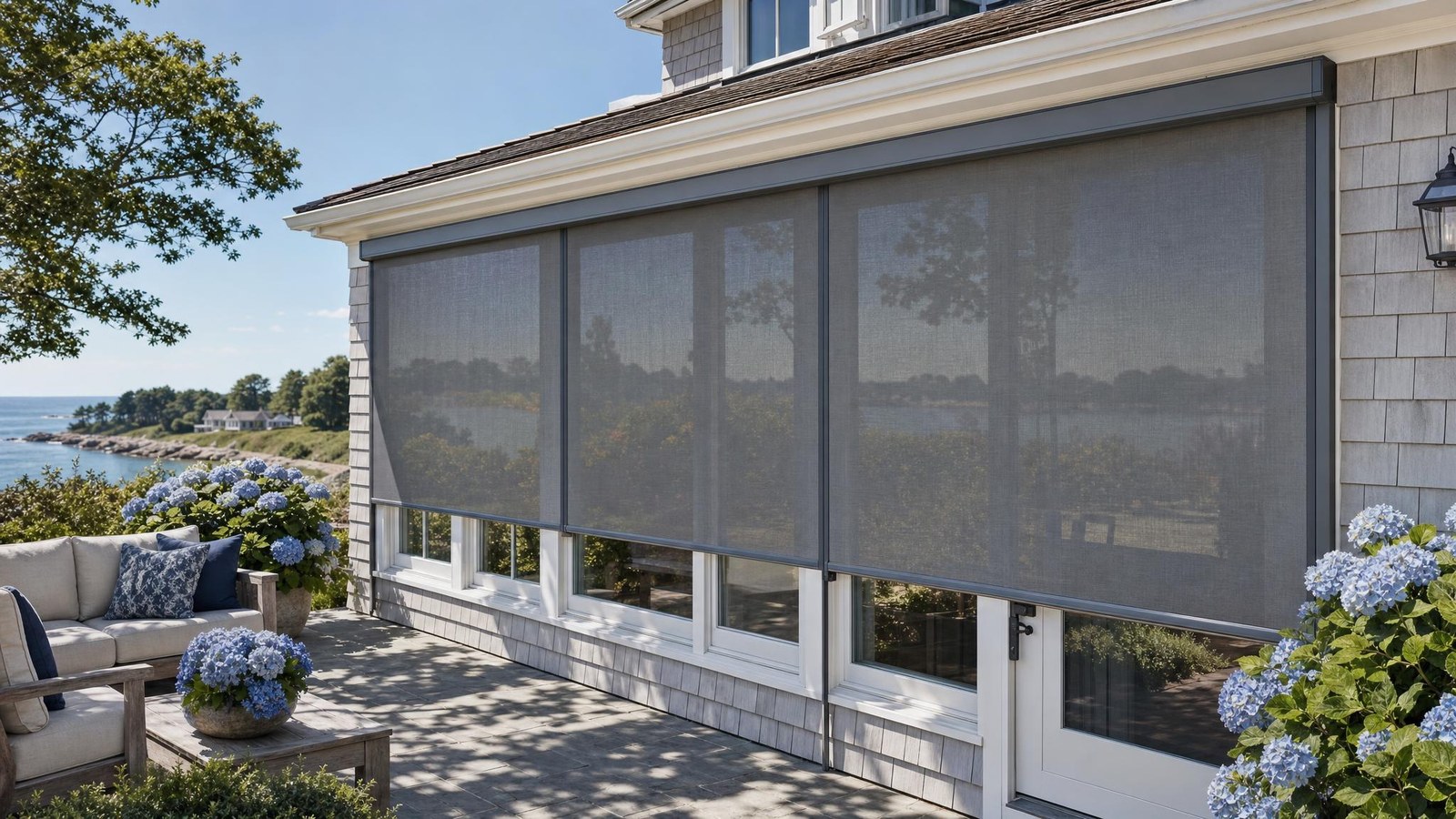
Exterior shades UV protection: what the openness number means
Exterior solar shades are rated by openness, the share of the fabric that is open weave. A lower number blocks more light and UV and gives you less of the view. Our exterior solar shades come in three levels, and the figures below are the ones on that page.
| Openness | UV blocked | View and privacy | Best for |
|---|---|---|---|
| 1% | Up to 97% | Densest weave, minimal outward visibility, most privacy | Sun-baked south and west exposures, rooms with valuable floors or art |
| 3% | About 95% | Balanced view and sun control | Most homes, the most popular residential choice |
| 5% | About 90% | Lighter weave, better view and airflow | Covered porches and patios |
Retractable screens use the same logic. Our solar mesh on motorized retractable screens blocks up to 97% of UV while keeping daytime privacy and an outward view. For a patio or porch where the furniture is the thing you want to protect, that is often the better answer than a window shade.

A lowered solar shade filters direct sun over seating while keeping daylight and the outdoor view.
Why outside beats inside
An interior blind stops light after it has come through the glass, so the heat is already in the room. An exterior shade intercepts the sun first. The U.S. Department of Energy makes this point in its guidance on window attachments and energy savings, noting that exterior shading outperforms interior treatments at reducing solar heat gain. A cooler window also means less heat loading the room and the surfaces in it.
For fading specifically, the bigger benefit is that a motorized exterior shade works without anyone remembering to close blinds. You set it, or tie it to a sun sensor, and the floor stays shaded on the afternoons it needs it. Our post on how awnings and exterior shades cut cooling costs goes deeper on the heat side, and exterior solar shades in Connecticut covers fabric and hardware choices.
Want a firm number for your home?
Matching the product to what you are protecting
Connecticut sun: low in winter, harsh off the water
Two local facts affect how you use shades. First, the winter sun is lower and reaches deeper into south-facing rooms, so a floor that feels safe in July can still be hit in January. Motorized shades let you raise them on cold days when you want the warmth and lower them when the sun gets harsh.
Second, on the shoreline, water reflects extra light onto glass and porches, which is why glare and fading show up in homes that do not seem to get much direct sun. If you live on the water, the same shade also cuts the glare that makes a deck hard to use. For coastal homes, we specify powder-coated aluminum housings and stainless hardware so the shade lasts through salt exposure. Our Groton screens page describes what we do for homes on the Thames and Sound.
When an exterior shade is not the right fix
Shades do not end fading. They slow it. If the problem is a north-facing room, a bright interior light, or a floor that has simply aged, a shade will not change much.
If you want an unblocked view all day, a 1% fabric will feel dark from inside. Choose 3% or 5% and accept a little less protection, or choose a motorized shade you can raise.
If the room only has a small window and the fading is mild, interior blinds or a UV film may be cheaper and enough. And if the opening is on an exposed corner with strong wind, we will tell you at the estimate whether a shade, a screen or an awning suits it.
A simple way to decide
- Find the room or space that fades. Note which direction its glass faces and what time of day the sun hits it.
- Decide what you are protecting: floors, upholstery, art, or outdoor furniture.
- Choose openness. Use 1% if protection matters most, 3% if you want a balance, 5% for covered, airy spaces.
- Pick motorized so the shade is actually used.
- Get a measured quote, because custom fabric cannot be resized after it is built.
Frequently asked questions
Do exterior shades really stop furniture and floors from fading?
They slow it down a lot, but nothing stops it completely. A 1% openness solar shade blocks up to 97% of UV, and a 3% fabric blocks about 95%. Fading also comes from visible light and heat, so some change over many years is normal even with good shades. The shade takes the harshest direct sun off the glass or the furniture, which is where most of the damage happens.
Is an exterior shade better than interior blinds for UV protection?
For heat, yes. Exterior shades stop the sun before it reaches the glass, while interior blinds act after the energy is already inside. For UV and fading, an exterior shade also keeps direct light off the room, though a closed interior blind can protect a floor or sofa well too. If fading is the only concern and the view does not matter, an interior treatment is cheaper. Most of our customers want both heat control and a working view.
Which fabric openness should I pick to protect furniture?
The 1% fabric gives the most UV blocking at 97%, but it is the darkest from inside and has the least outward visibility. The 3% fabric at about 95% UV is the most popular residential choice because it balances protection and view. The 5% fabric blocks about 90% and suits covered areas where you want airflow and a clearer view.
Will an awning protect my outdoor furniture and cushions?
It shades them from direct overhead sun, and Sunbrella fabric is solution-dyed, which means the color runs through the whole fiber. That helps the awning itself keep its color. Cushions and wicker under it will still see reflected and low-angle light, so you will slow fading rather than end it. Our Sunbrella maintenance guide covers care.
Do exterior shades make my house darker or colder in winter?
Lower-openness fabrics do reduce daylight in the room, and in winter a closed shade can block useful low-angle sun. That is a good reason to choose motorized shades. You lower them on bright summer afternoons and raise them in winter or on cloudy days.
How much do exterior shades and awnings cost?
It depends on size, fabric and mounting, and we quote after measuring. Motorized awnings commonly run from about $4,500 to $14,000+ installed, and screens run from about $800 for a small opening up to $20,000+ for a full enclosure. See our awning cost guide and screen cost guide.
Protect what you own from the sun
Tom Magnoli will measure your windows or patio, show you fabric swatches and give you a clear quote at no cost. Our apples to apples price match guarantee applies if you bring a quote for the same specs.
Or call (860) 510-3862