
Outdoor Living · Shade Planning
Outdoor Kitchen Shade in Connecticut: What to Shade, What to Screen, and What to Keep Clear
An outdoor kitchen is a heat source, a work surface and a dining room in one spot. Shading it well means planning three zones separately. Here is how we approach it, including the safety line you should not cross.
Outdoor kitchens are a popular Connecticut upgrade: a built-in grill, a counter with a sink or fridge, and a table nearby. The kitchen itself is a big investment, and the first July afternoon on it often brings the same discovery. The stone is hot, the cook is squinting into the sun, and guests are moving their chairs.
This guide on outdoor kitchen shade in Connecticut explains how we think through it. The short version is to treat the space as three zones, shade each one for what it needs, and keep fabric and grill apart. If you want the broader product comparison first, start with our pergola vs patio cover vs retractable awning guide.
In this guide
- The one rule: do not put the grill under the awning
- Three zones, three shade jobs
- Awnings for the dining and prep side
- Screens and exterior shades for sides and bugs
- Protecting the kitchen itself
- When shade is not the answer
- Outdoor kitchen shade in Connecticut: frequently asked questions
- Planning an outdoor kitchen?
The one rule: do not put the grill under the awning
Everything else on this page is flexible. This is not. Grills produce flame, radiant heat and grease smoke. Fire safety guidance from the National Fire Protection Association is to place the grill well away from the home and deck railings and out from under eaves and overhanging branches. You can read their grilling safety guidance for details.
Fabric, arms and a closed cassette are not designed to sit above an open flame. A grill under an extended awning also traps smoke. Connecticut’s fire code goes further for many multifamily buildings, where it restricts grills on balconies and close to the building. If you live in a condo or an apartment, ask your fire marshal and your association before you buy a grill, let alone shade it.
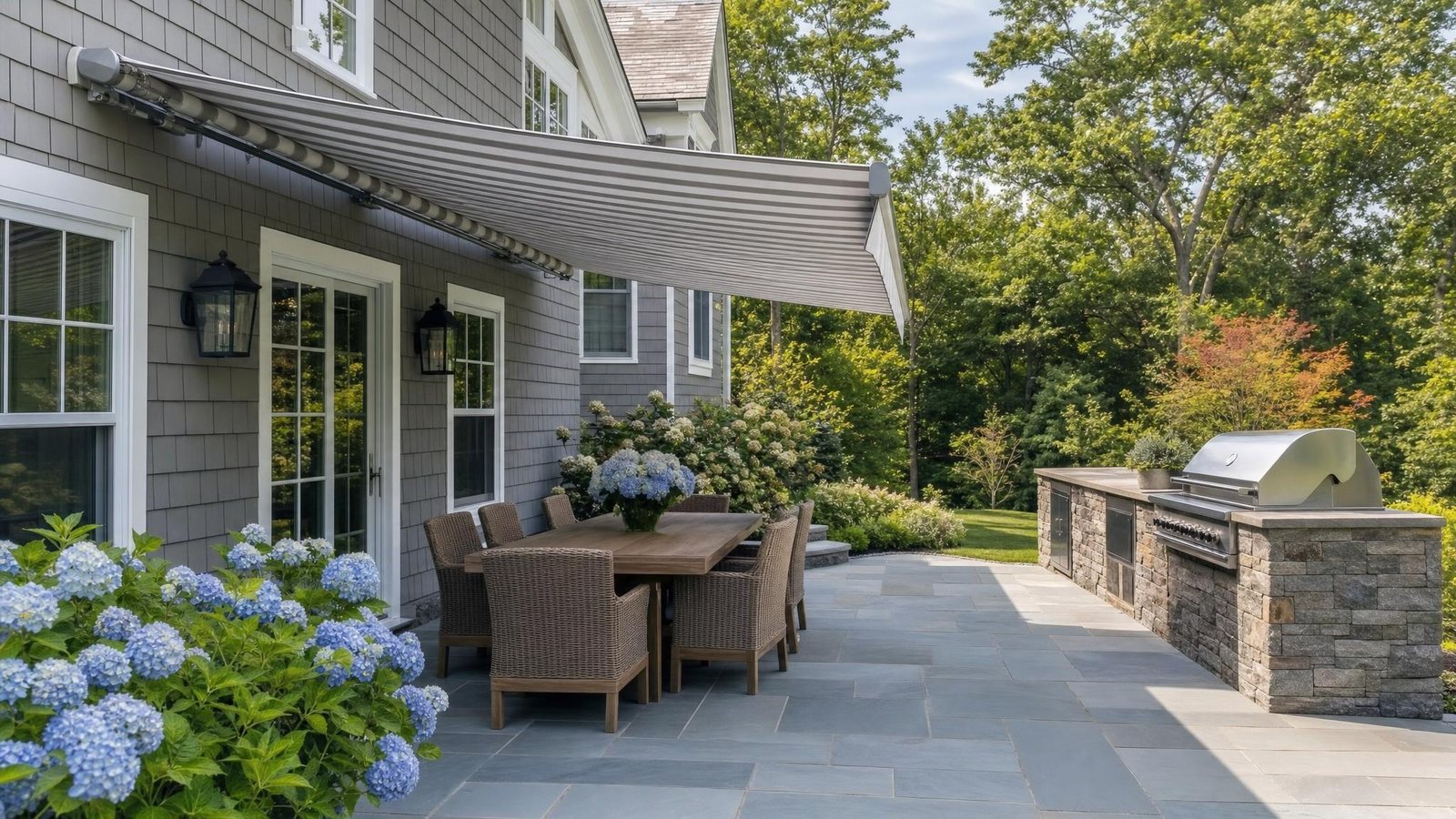
Our practice: we position the awning to cover seating and prep, and we keep the grill outside the fabric footprint. If your layout leaves no room for that, we will say so at the estimate, and we will not install an awning over a cooking appliance.

Grill, seating and awning are separate decisions. Layout matters more than product.
Three zones, three shade jobs
| Zone | What it needs | What we usually suggest |
|---|---|---|
| Dining and lounge | Overhead shade, rain cover, cooler seating | Retractable awning sized to the table and chairs |
| Prep counter and bar | Sun off the work surface and the people at it | Awning edge over the counter, or a side shade for low sun |
| Cooking zone | Open air and clearance, plus wind awareness | No fabric overhead. Wind or side screening only if it stays clear of the heat |
| Evening bugs | Keep flying insects off food and guests | Motorized insect screen on one or more sides |
Awnings for the dining and prep side
Our motorized retractable awnings come in widths from 10 to 40 feet with projection up to 12 feet, with Sunbrella fabrics and a wireless remote. That range covers a bistro table or a full outdoor dining room. A built-in LED light bar comes standard, which helps when dinner runs past sunset. For the cost and the options that move the price, see our retractable awning cost guide.
Two practical details help. First, size the projection for the afternoon sun, not just noon. In late afternoon the sun is low, and an awning that looks generous at midday can leave the table in sun at five o’clock. We check the sun path at the estimate. Second, think about wind. A wind sensor is an option, and it is worth having if you will be away from the patio while the awning is out.
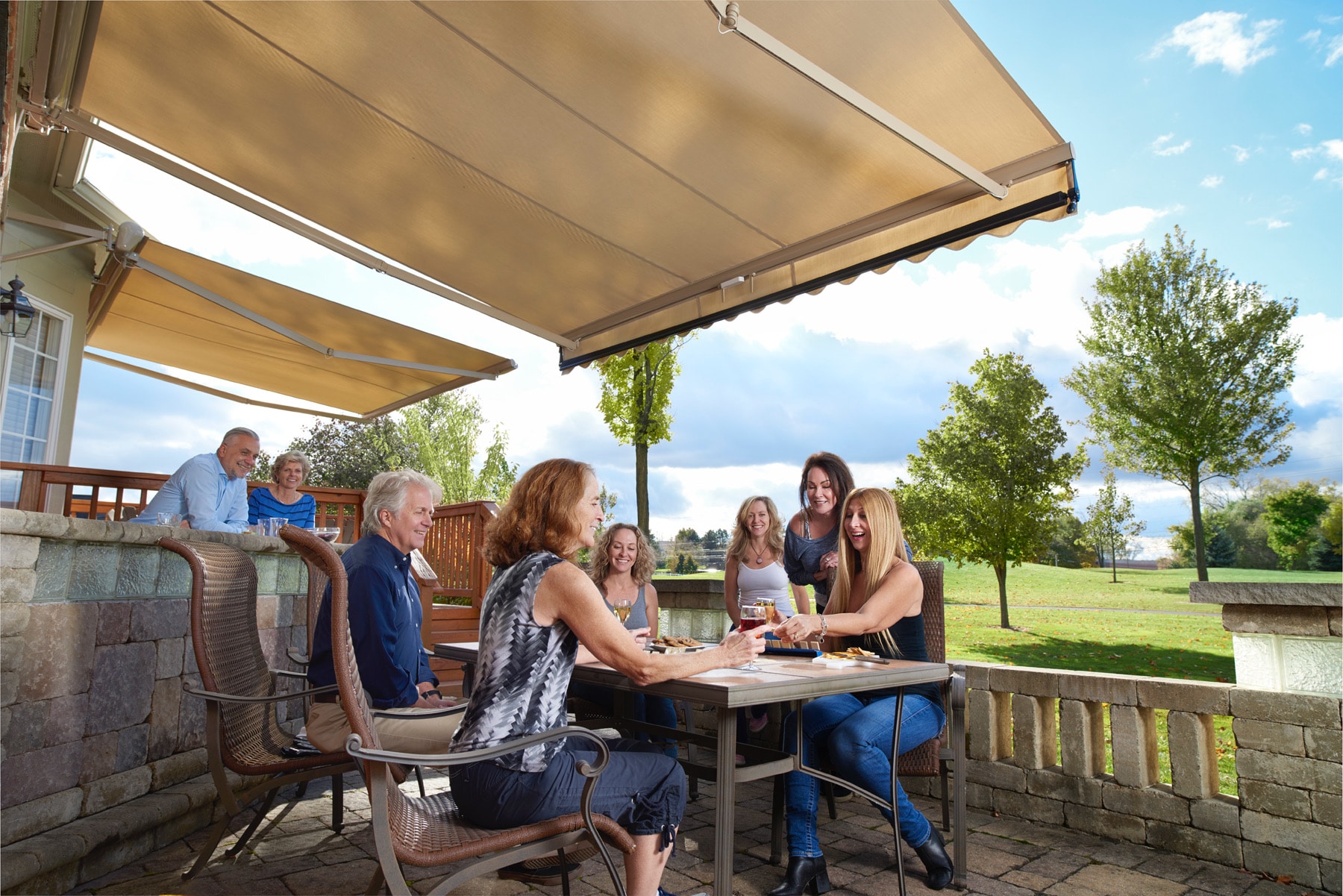
An awning over the table and bar side gives shade where people sit and eat.
Want a firm number for your home?
Screens and exterior shades for sides and bugs
An awning handles overhead sun and rain. It does not stop a low west sun from hitting the side of the table, and it does not stop mosquitoes. That is where screens and exterior shades earn their place. Our motorized retractable screens are available with insect mesh (about 90 percent insect block), solar mesh (up to 97 percent UV block), privacy mesh and wind mesh, and they retract into a housing when you want the open view. Our exterior solar shades offer 1, 3 and 5 percent openness for different balances of sun control and view.
For the bug side of the decision, read our guide to mosquito protection with retractable screens. If the kitchen sits next to a pool, pool deck shade has more ideas on layering shade around water.
Keep any screen or shade clear of the cooking zone. A screen on the far side of the dining area is a different thing from a screen near the grill, and we mount them to keep a safe distance.
Protecting the kitchen itself
When shade is not the answer
If you want to cook under cover in light rain or all season, a retractable awning is not the right tool, because it is meant to be retracted in wind and storms and should not sit over a grill. In that case you want a fixed, vented structure designed for cooking, which is a builder’s job. Our comparison of motorized louvered pergolas covers one alternative. If your main problem is only bugs, a screen alone may be enough, and if it is only sun on glass, an exterior shade may fit better.
Also remember the approvals. Gas lines and electrical work usually need licensed trades and permits, and the shade can need its own sign-off. Our guide to awning and screen permits and HOA rules explains how to ask. For your area, see our Norwich motorized screens page, one of the towns where we install.
Outdoor kitchen shade in Connecticut: frequently asked questions
Can I cook on a grill under a retractable awning?
We do not recommend it. Grills throw heat, flame and grease smoke, and fabric and arms should stay well clear. Fire safety guidance says to place grills away from the house, deck rails and out from under eaves and overhangs. Put the awning over the dining and prep areas and leave the grill in open air or under a structure designed for cooking.
How far should the awning stay from the grill?
There is no single number that suits every grill and layout, so we do not give one. We lay out the awning edge, the grill position and the wind direction on site, and we keep the grill clear of the fabric. Follow your grill manufacturer clearance instructions and your local fire marshal if you are unsure.
Which is better for an outdoor kitchen, an awning or a screen?
They do different jobs. An awning gives overhead shade and rain cover over the dining and prep area. A screen keeps bugs out and cuts low sun and wind at the sides. Many outdoor kitchens use an awning overhead and a screen on one side. Our guide comparing the two goes deeper.
Will shade help my outdoor refrigerator and countertops?
Shade tends to keep surfaces and appliances cooler and protects furniture and cushions from fading. Follow the appliance manufacturer ventilation requirements, since enclosed cabinets and sun both affect how hard a unit has to work.
Do I need a permit for an outdoor kitchen awning?
It depends on the town. The kitchen itself, especially gas and electrical lines, usually involves licensed trades and permits, and the awning can have its own review. See our permits and HOA guide, and confirm with your local building department.
What does outdoor kitchen shade cost in Connecticut?
Our retractable awning cost guide shows ranges from about $2,800 to $14,000 or more, depending on size, motor and fabric. Motorized screens run from about $800 for a small opening to $20,000 or more for a large enclosure. We quote after measuring.
Planning an outdoor kitchen?
We will measure, check the sun and wind on your patio, and lay out shade that keeps the grill clear. Every quote is backed by our apples to apples price match guarantee.
Or call (860) 510-3862