
Winter Care · Connecticut Homes
Snow and Retractable Awnings: What Connecticut Homeowners Should Know
Retractable awnings are made for sun and light rain, not snow. Here is what to do when snow is forecast, what to do while it falls, and what to check afterward.
Published November 2026
Short answer: do not leave a retractable awning extended when snow is coming. Retract it before the snow starts, make sure it is dry when it closes, and do not rely on a wind sensor to protect it, because a sensor reacts to wind, not to the weight of snow. If snow or ice is already on an extended awning, keep people out from under it, do not force the motor, and call for service if anything looks bent. Our awnings page says the same in one line: retract the awning before heavy snow or strong wind.
Every fall someone asks whether a retractable awning can “take” a Connecticut winter. The honest answer is that a retracted awning with its fabric stored is built for the off-season, while an extended awning is built for sun and light rain, not for a load of snow. This guide is about the storm-day decisions: what to do when snow is in the forecast, what to do while it falls, and what to check afterward. For the full once-a-year shutdown routine, read our winterization guide.
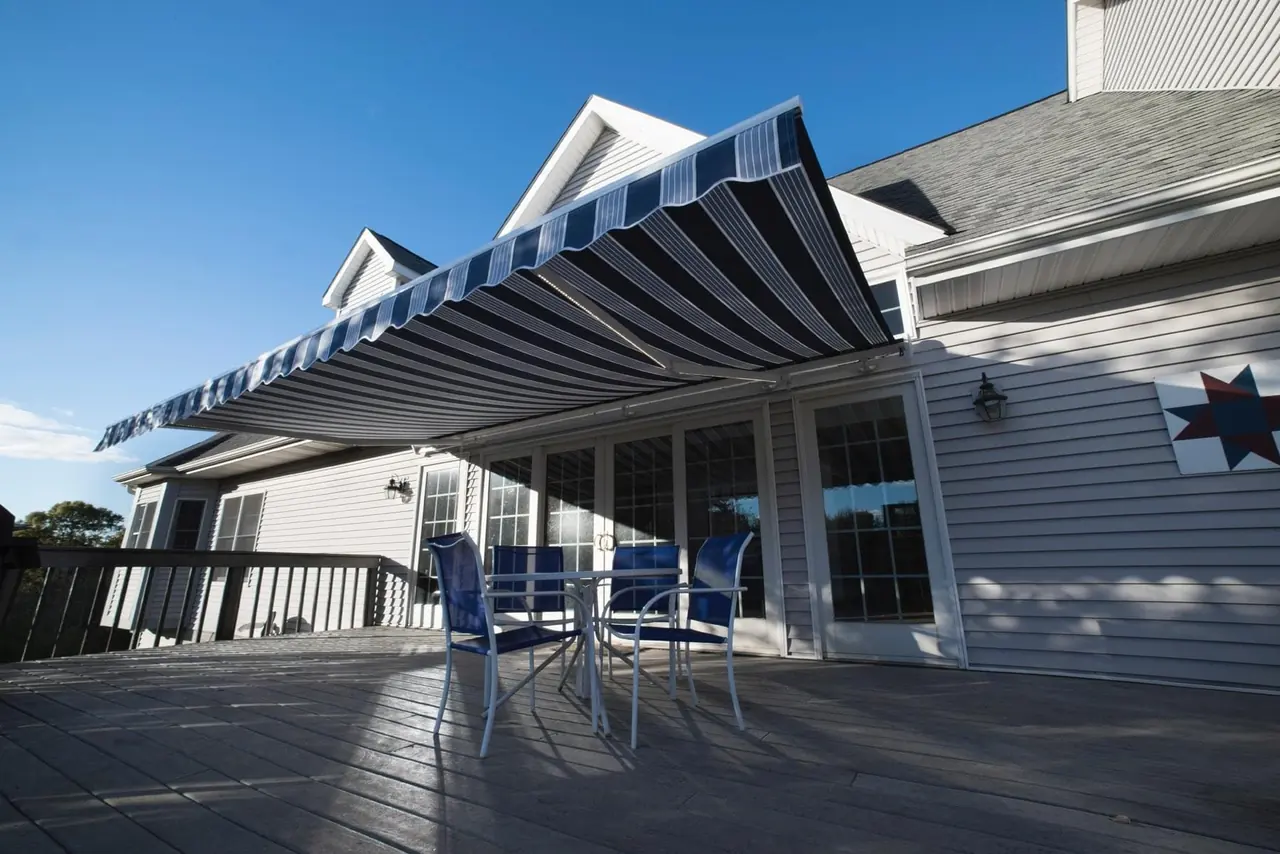
A retractable awning over a deck. In winter, the awning belongs retracted, not extended.
Why snow is different from wind and rain
Rain runs off an extended awning, and our awnings carry a water-repellent finish for light rain. Wind is something a sensor can sense. Snow is neither of those. It sits, it accumulates, and it can freeze. Three things make it a problem for a product designed to be extended over a deck or patio:
- Weight. An extended awning is held out from the wall by its arms. Wet snow adds load to the fabric and the arms, and the load keeps growing for as long as the snow keeps falling.
- Ice. Meltwater that refreezes in the fabric, in the roll or around moving parts can make an awning stiff, and a stiff awning is more likely to be damaged when someone runs it.
- Timing. Snow often arrives overnight or while nobody is home. A sensor that wakes up for gusts will not wake up for a quiet, heavy snowfall.
None of this means a retractable awning is a poor choice in Connecticut. It means the awning needs a person to decide, once, that the season has changed. If that is you, the cheapest protection is a habit, not an accessory.
What should I do with the awning when snow is forecast?
Treat a snow forecast the way you would treat a hurricane watch for a patio umbrella: put it away early. A practical sequence looks like this:
- Retract it fully. Use the remote, wall switch or app, and wait until it stops. A half-retracted awning leaves the arms exposed.
- Let it close dry if you can. If the fabric is wet, retract anyway ahead of the storm, then plan to extend and dry it on the first mild, dry day. Our Sunbrella care guide explains why damp fabric should not stay rolled for long.
- Clear the deck. Move furniture and grills out from under the awning path so nobody has to work around an extended awning in bad weather.
- Turn off automation for the storm. If you have a timer or a smartphone schedule, pause it so the awning does not extend on a sunny morning while snow still sits on the deck. Check how your system works in our power and control options guide.
The National Weather Service keeps a winter weather safety page with forecasts and guidance for before, during and after a winter storm. Use it to time the retract: the goal is to be done before the first flakes, not during the first inch.
Snow-day decisions at a glance
| Situation | What to do | What to avoid |
|---|---|---|
| Snow in the forecast, awning extended | Retract it fully before snow starts | Waiting to see how much falls |
| Awning retracted, snow on the cassette or roof edge | Leave it closed; clear the area below if it is safe | Running the motor to shake snow off |
| Snow or slush sitting on an extended awning | Keep people and furniture out from under it; call us if the arms look bowed or the fabric is stretched | Standing under it, climbing on it, or hitting it with a shovel |
| Ice on the awning or around moving parts | Wait for it to melt; do not force it | Running the motor against a stuck or frozen awning |
| After the storm | Look for bent arms, ripped stitching, and anything that sits crooked; operate it once the weather is mild | Assuming it is fine because it looks fine from the yard |
If your awning looks bent or will not retract after a storm, stop and call. We cover typical issues in our repair and replacement guide.
Can a wind sensor protect my awning from snow?
No. A wind sensor is designed to detect wind-driven movement and retract the awning when wind becomes unsafe. We offer it as an option on our awnings, and it is worth having if nobody is home to retract the awning by hand during a gusty afternoon. Our wind and sun sensor guide covers how sensors work and what they can and cannot do. A sensor does not weigh snow, and it does not see ice, so a calm snowfall will not trigger it. Think of a sensor as insurance against a sudden gust in the sunny months, and the retract-before-snow habit as your winter plan.
One more reason not to depend on automation: many motors are not meant to be operated in deep cold or against a frozen load. Follow your manufacturer’s instructions, and ask us for the guidance that applies to your model.
What about retractable screens, solar shades and door screens?
The same rule applies, with small differences:
- Motorized retractable screens are rated for moderate wind. Our motorized screens page advises retracting them during severe weather. A retracted screen sits inside its cassette.
- Exterior solar shades should be retracted during heavy snow and ice, per our exterior solar shades guide.
- Mirage door screens retract into a slim housing next to the door. Keep the track clear of ice and snow so the screen can move freely.
For the broader storm checklist, including wind and flooding, see our storm prep guide for awnings and screens and our guide to when to retract awnings and screens.
What does a winter-ready setup look like?
Before the cold arrives, a short checklist keeps the winter simple:
- Pick a mild, dry day, extend the awning, brush off leaves and debris, and let it dry fully before retracting for the season.
- Look at the hardware where the arms meet the wall bracket and the front bar. Anything loose or corroded is easier to fix now than in March.
- Decide who retracts the awning when it snows. If the answer is “whoever is home,” make sure that person knows where the remote is.
- If you will be away for weeks, retract the awning and consider shutting off its power. Ask us how to do that on your system.
- Photograph your awning and mounting before winter. If something looks different in spring, you will have a clear before-and-after.
We keep these steps short on purpose. The details, including cleaning before storage, are in the winterization guide, and the spring side of the routine is in our spring checklist.
Will the warranty cover snow damage?
Warranties differ by product and by manufacturer, and we do not summarize them here. What we recommend is simple: ask for the exact warranty terms for your model in your written quote, and read how the terms treat weather, snow and ice. Our awnings come with manufacturer warranties on the fabric, motor and frame, and if there is ever an issue with the installation, we make it right. Whether a given snow event falls under a warranty is a question for your written terms, not a blanket answer.
Thinking about a new awning before spring?
If you are planning an awning for next summer, winter is a good time to start the conversation. The estimate is free, we measure on-site and bring fabric samples, and the full process from a signed quote to installation takes about 3 to 4 weeks. Read the details on our awnings page, or see what to expect at a free estimate and the best time to install a retractable awning.
Frequently asked questions
Can a retractable awning stay extended in the snow?
No. We recommend retracting before heavy snow or strong wind. An extended awning is meant for sun and light rain, and snow adds weight to the fabric and arms.
Is it safe to leave a retracted awning on the house all winter?
Many owners do. A retracted awning has its fabric stored away, and cassette-style units add a housing around it. Before the first hard freeze, clean it, let it dry fully and check the hardware. Our winterization guide has the step-by-step routine, and we can tell you what applies to your model.
Will my wind sensor retract the awning when it snows?
Not for snow. A wind sensor reacts to wind-driven movement. A calm, heavy snowfall will not trigger it, so retract the awning yourself when snow is forecast.
What should I do if snow is already on my extended awning?
Keep people and furniture out from under it and avoid hitting it with a shovel or hard tools. Do not force the motor against a heavy or frozen load. When the weather allows, inspect the arms and fabric, and call us if anything is bent, stretched or will not retract.
Does the warranty cover snow damage?
It depends on the written warranty for your product. Ask for the exact terms for your model in your quote and read how they treat snow, ice and wind.
What about retractable screens and solar shades in the winter?
Retract them during heavy snow, ice and severe weather. Screens are rated for moderate wind, and our exterior solar shades guide advises retracting shades during heavy snow and ice storm conditions.
Can I run my awning in freezing weather?
Cold makes fabric stiffer and ice can lock moving parts. Follow your manufacturer’s instructions, do not force a frozen awning, and ask us about the operating limits for your model.
When should I schedule a spring check-up?
On the first mild, dry day after the last snow, extend the awning, look it over and clean off debris. Our spring checklist walks through the steps, and you can call us if something looks off.
Planning an awning before spring?
Tom will visit, measure and show you fabric samples at no cost. We will match a competitor’s written quote for the same brand, size and specs.
Or call (860) 510-3862