
Seasonal Checklist · Awnings · Screens
How to Get Retractable Awnings and Screens Ready for Spring in Connecticut
A homeowner-friendly checklist for waking up a retractable awning or screen after a Connecticut winter: what to look at, what to clean, how to test it safely, and when to stop and call someone.
Short answerBefore the first warm weekend, inspect the unit while it is still retracted, replace the remote battery, clean the fabric or mesh and tracks, then run one slow extend-and-retract cycle while you watch both sides and test the wind sensor if you have one. Do the visual checks and cleaning yourself, and leave the motor, arms and wall mounting to a professional.
Last updated: October 2026. Written by the Shoreline Shade team in Clinton, CT.
In this guide
- When should you get retractable awnings and screens ready for spring in Connecticut?
- What should you check in the first ten minutes, before you operate anything?
- How do you test the motor, remote and wind sensor?
- How do you clean awning fabric and screen mesh after winter?
- What does a spring check look like for each product?
- What winter damage should you look for?
- Should you do the spring check yourself or call a pro?
- What should you watch during the first week of use?
- When is a spring checklist not enough?
- What should you note down now, in late fall, for next spring?
- Frequently asked questions
- Ready for the first warm weekend?
When should you get retractable awnings and screens ready for spring in Connecticut?
Do the spring check on the first dry, mild weekend after the last hard freeze, which in much of Connecticut means sometime between late March and late April. Do it before the first hot afternoon, not during it. Cold fabric is stiff, wet tracks hold grit, and a motor that sat through months of freezing and thawing deserves a gentle first run rather than a hard test on a 75-degree day when guests are already on the patio.
A quick honesty note about timing: it is late October as we publish this update, so most homeowners have already retracted for the season. Nothing in this guide needs doing today. What is worth doing now is a five-minute note to yourself. Take a few photos of how the unit looks, write down the remote’s battery type, and jot down anything that felt off in the fall. Those notes make the spring check faster and make any service call more precise.
If you are thinking about a new unit rather than checking an old one, spring is also when installers get busy, because everyone wants shade at the same time. Timing varies by product and by the season, so ask when you request an estimate rather than assuming. Our guide to the best time to install a retractable awning covers the trade-offs of installing off-season.
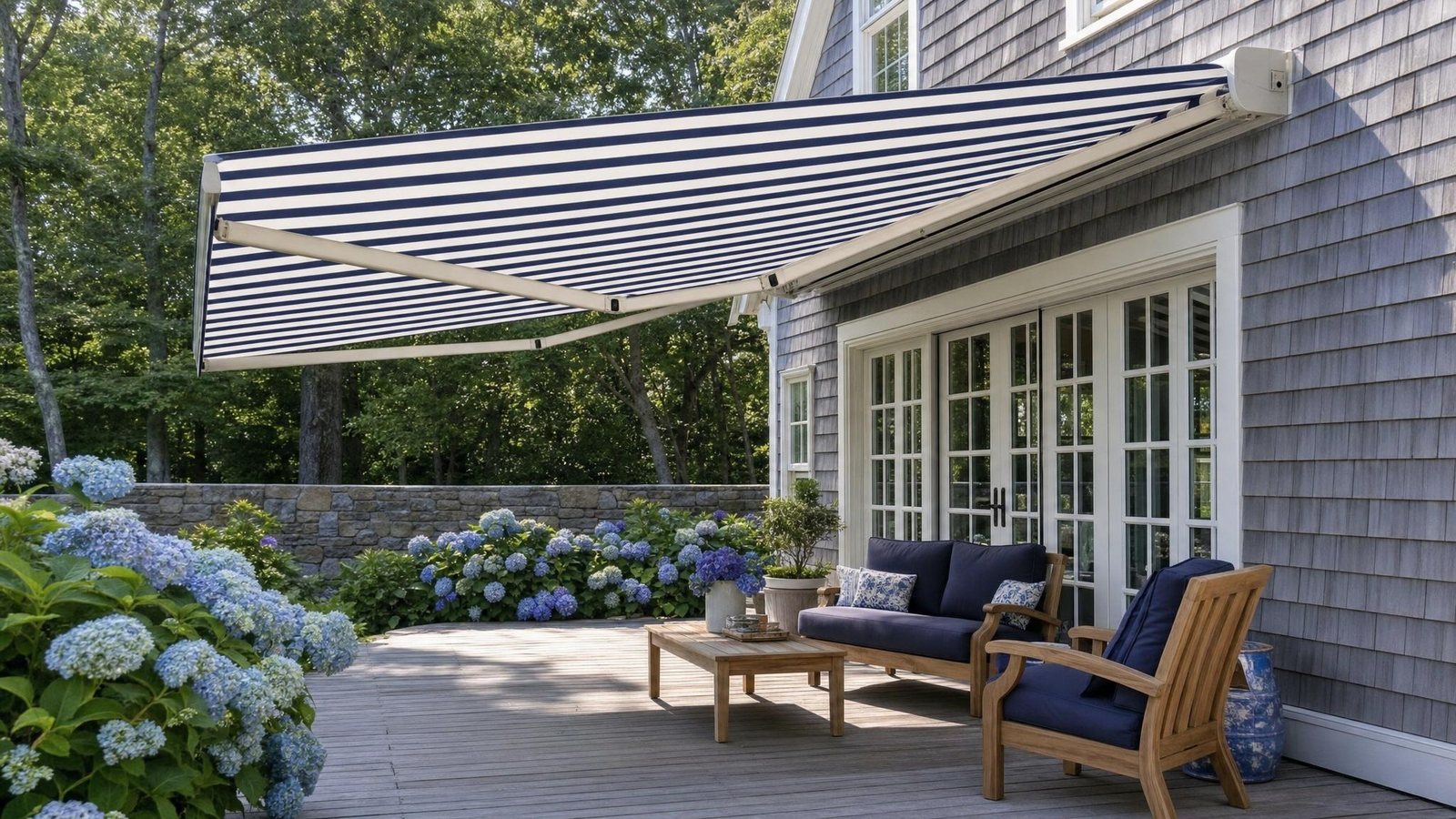
What should you check in the first ten minutes, before you operate anything?
Start with your eyes and hands, not the remote. Walk the whole unit with the awning or screen fully retracted and look for anything that changed over winter. This takes about ten minutes and it is the step most people skip.
- Look at the housing or cassette. It should sit tight to the wall or header with no gap that was not there last fall. Daylight showing between the housing and the wall, or a visible sag at one end, deserves a call.
- Look at the fasteners and brackets. Check for rust streaks running down the wall, bolts that look raised, or staining that suggests water is getting behind a bracket. Do not try to tighten structural fasteners yourself.
- Look up for nests and debris. Birds, wasps and mice like a sheltered cassette. Leaves and pollen collect in track ends and along the bottom bar.
- Look at the fabric or mesh. Note mildew spots, creases that will not relax, small tears, and any place where the stitching looks worn. Mesh on a retractable screen should lie flat and run square in its tracks.
- Look at the surroundings. Did a branch grow into the path, did a gutter start dripping onto the fabric, did a snow load slide off the roof onto the unit during winter? Those are causes, and fixing the cause matters as much as cleaning the effect.
- Check the wall or header behind it. Soft wood, peeling paint, or fresh caulk cracks around the mounting point are early signs of water intrusion that no amount of fabric care will fix.
Write down what you see. If something looks wrong, stop here. Operating a motorized unit that is out of square or physically caught on something is how a small problem becomes a large one.
How do you test the motor, remote and wind sensor?
Once the walk-around is clean, run the unit through one slow cycle. Our retractable awnings use Somfy or DOOYA motors with a wireless remote, and our motorized retractable screens use Somfy motors, so the basic routine is similar. Exact steps differ by model, so treat your owner’s manual as the final word.
- Replace the remote battery first. A weak battery causes a surprising share of “my motor stopped working” calls. Do it before you troubleshoot anything else.
- Extend a little, then stop. Run the awning or screen out a foot or two and listen. Smooth, even motor sound is normal. Grinding, clicking, or a motor that strains is not.
- Watch both sides. The leading edge should move evenly. If one side lags, a track or arm is catching on something.
- Extend fully, then retract fully. Confirm it stops where it is supposed to at each end. If it overshoots or stops short, the travel limits may need adjusting, which is a job for a professional rather than a guess.
- Test the wind sensor if you have one. The wind sensor is an optional add-on that retracts the unit when wind exceeds a set level. Many owners never test theirs. Check that the receiver is powered and, where the model allows, trigger it as the manual describes. Sensor settings vary by model, so we will not quote a number here.
- Test timers and app control. Some models support smartphone control and timers. If you use them, confirm the clock and the connection survived any winter power outages. Our guide to smart-home integration for motorized awnings explains what usually needs re-pairing.
- Test the light bar. If your awning has the built-in LED light bar, switch it on while you are standing there, so a dead bulb is a note instead of a surprise on the first evening party.
If anything fails any of those steps, retract the unit if it will still retract, leave it alone otherwise, and call. Forcing a stuck awning by hand can bend arms and strip gears.
Want a firm number for your home?
How do you clean awning fabric and screen mesh after winter?
Cleaning is the step homeowners can and should do themselves, and it is simpler than most people think. For awning fabric, the care routine we give customers is the same one the fabric maker recommends in general terms: brush off loose dirt first, wash with a mild soap solution, and rinse thoroughly so no soap film stays behind and attracts dirt. For retractable screens, occasionally brush debris off, rinse the mesh with a garden hose, and wipe the tracks clean.
What to avoid: pressure washers, stiff wire brushes, harsh solvents and anything abrasive. They can damage fabric coatings, fray mesh and strip the finish off aluminum. If you are unsure about a stain, test a small hidden spot first or ask before you scrub. Our full care guide is in Sunbrella awning maintenance in Connecticut.
Let everything dry completely before you roll it back up. Rolling damp fabric into a cassette is the easiest way to grow mildew, and spring mornings in Connecticut are damp more often than people expect. If the day turns cloudy, leave the awning extended for an hour or two in dry air and retract it after it has dried.
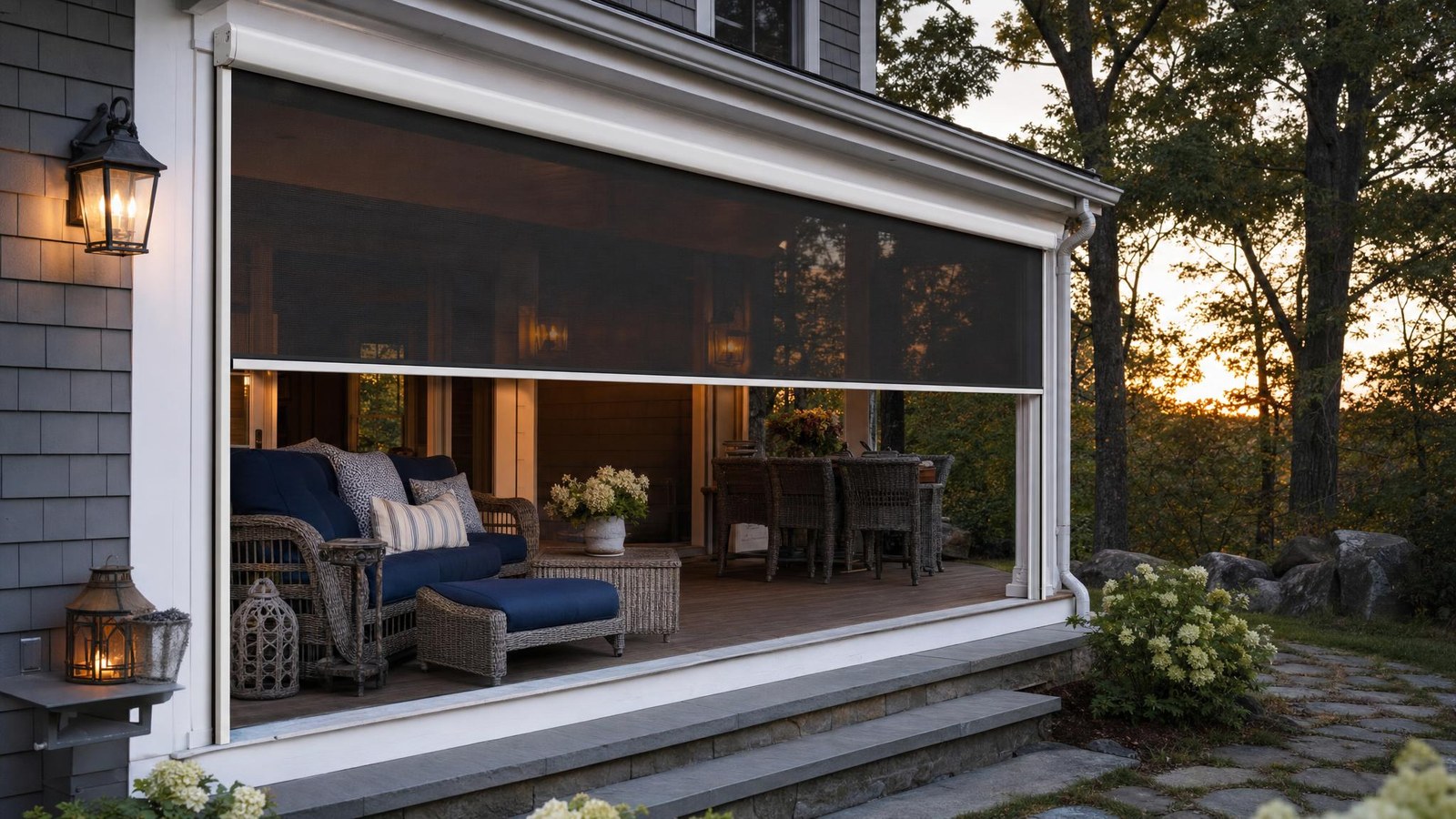
What does a spring check look like for each product?
Different products fail in different ways. This table pulls the checks together by product so you can scan for yours.
| Product | What to look at | Red flag | Who handles it |
|---|---|---|---|
| Retractable awning | Housing tight to wall, arms, fabric edge, bottom bar, motor sound | Uneven extension, sagging arm, torn seam, grinding | You clean; a pro adjusts arms, limits and mounting |
| Motorized retractable screen | Cassette, side tracks, mesh edges, bottom bar, remote and sensor | Mesh popping out of a track, motor stalls, debris jammed in track | You clean tracks and mesh; a pro handles track alignment and motor |
| Exterior solar shade | Fabric flatness, side guides, bottom bar, window-side wear | Fabric waving or binding, damaged zipper or guide | You rinse; a pro corrects guides and tension |
| Retractable door screen | Housing, track at the floor, mesh edge, magnetic latch if present | Slow or slamming retraction, debris in the bottom track | You vacuum the track; a pro adjusts the retraction mechanism |
General guidance only. Components vary by model, so follow your manual for any specific procedure.
What winter damage should you look for?
Connecticut winters are hard on anything mounted outside. Freeze-thaw cycles work moisture into small gaps, road salt and coastal air speed up corrosion on fasteners, and heavy wet snow can slide off a roof straight onto a unit. A few things to look for specifically:
Water getting behind the mounting
Rust streaks, stained siding, or a soft spot in the trim around the housing mean water is finding a path. This is a building envelope problem first and an awning problem second, and it is worth fixing before the awning flexes the same weak spot for another season.
Impact or snow-slide damage
A dented housing, a bent bottom bar, or a gouge in a screen cassette usually has an obvious cause: ice or snow from above. If the unit was retracted as we recommend in how to winterize a retractable awning in Connecticut, damage tends to be limited to the housing. If it was left out, check the fabric and arms carefully.
Salt and coastal corrosion
Homes near the shore see faster hardware wear. Our post on salt air and coastal awnings and screens covers how rinsing and inspection change near the water.
Animals
Nests and droppings in a cassette are common. Clear what you can reach safely from a stable position, and do not run the motor if you suspect something is lodged inside.
Mildew and stuck folds
Fabric stored slightly damp can spot with mildew and may hold creases. Light spots usually respond to a gentle wash. Creases often relax once the fabric warms up in the sun.
Should you do the spring check yourself or call a pro?
Most of the checklist is safe for a homeowner standing on the ground. The line is simple: if you have to climb, loosen something, or force something, stop. Awning arms are under tension, motors are wired, and a housing that is fastened to the wall is a structural item. None of that is a DIY learning project.
If you bought a retractable awning or retractable screen from us and something looks off, call or send a photo and we will tell you whether it is a quick adjustment or a bigger repair. If you are weighing repair against replacement on an older unit, read repair or replace a retractable awning in Connecticut first.
What should you watch during the first week of use?
A unit that passes the bench test can still reveal problems under real conditions. For the first week of spring use, pay attention to a few things.
- Rain runoff. If your awning has a pitch, water should run off the front or low side rather than pooling. Pooled water is heavy and stretches fabric.
- Wind behavior. Watch how it handles a breezy day, and get in the habit of retracting early. The National Weather Service has plain-language wind safety material if you want to understand gusts. Our rules of thumb are in when to retract an awning or screen in Connecticut.
- Noise. New squeaks, rubbing or clicking are early warnings. Note when they happen and record a short phone video.
- Sun angle. The sun is higher in May than in March, and your shade pattern will change through the season. A unit that looked perfect in April may need a different projection setting in July.
- Storm forecasts. Spring thunderstorms can arrive quickly. Ready.gov explains the basics on its thunderstorm safety page, and our storm prep guide for awnings and screens covers what to do with your equipment before one hits.
When is a spring checklist not enough?
A checklist catches maintenance issues. It does not fix worn-out equipment. If the fabric is faded and brittle, the arms are bent, the motor strains even after a clean and a new remote battery, or you have repaired the same issue more than once, the honest answer may be replacement. We would rather tell you that than sell you a service call that only delays the decision.
Also be skeptical of any generic checklist, including this one, when your unit is a model we did not install or an older design. Details like travel-limit adjustment, sensor settings and motor reset steps differ by manufacturer and by year. If your manual disagrees with this article, the manual wins.
Finally, a spring check does not replace planning for a bigger problem. If your patio needed more shade than the awning delivered last summer, or bugs kept you off the deck, spring is the time to consider mosquito protection with retractable screens or a different projection. Tom can look at it during a free estimate.
What should you note down now, in late fall, for next spring?
Because this post is going up at the end of October, here is the short version of what is worth doing this week rather than in March.
- Confirm every awning and screen is fully retracted and dry before the first hard freeze.
- Take dated photos of each unit, the housing, and the wall around it. Nothing helps a spring comparison like a before picture.
- Put the remote, with a spare battery, somewhere you will find it in April. Label which remote controls which unit if you have more than one.
- Clear gutters above the unit so winter ice does not form a drip line onto the fabric.
- Write down any odd behavior from this past season, even small things like a slow start or a sticky track.
Homeowners across the state follow the same routine, whether they live in Madison, Clinton or Colchester. If you have a question about a unit we installed, call (860) 510-3862. For a wider look at the coming season, our retractable awning buying guide walks through choices if you are adding something new.
Frequently asked questions
When should I take my retractable awning out of winter storage mode in Connecticut?
Wait for a dry, mild day after the last hard freeze, usually late March to late April in most of the state. Inspect first, run one slow cycle, and avoid operating the motor in freezing temperatures or with ice or snow on the fabric. A gentle first run is safer than a hard test.
How do I clean a retractable awning after winter?
Brush off loose dirt, wash with a mild soap solution, and rinse thoroughly. Let the fabric dry fully before retracting it. Avoid pressure washers, stiff brushes and harsh solvents, which can damage coatings and fabric. Check your fabric maker’s care instructions, since products vary.
How do I know if my awning motor is failing?
Warning signs include grinding or clicking, a motor that strains, uneven movement, or stopping short of the end. Replace the remote battery and check for debris first. If the problem continues, stop using the unit and call a professional rather than forcing it.
Should I test the wind sensor every spring?
Yes, if you have one. A sensor is only useful if it is powered, positioned correctly and working. Test it as your manual describes, since methods vary by model. Do not treat it as a substitute for retracting the unit yourself before a storm.
How do I clean retractable screen mesh and tracks?
Brush off debris, rinse the mesh with a garden hose, and wipe the tracks clean. Keep it gentle. Avoid pressure washers and abrasive pads. Make sure the mesh is dry before you retract it, and clear any grit from the track ends so the bottom bar travels smoothly.
Can I tighten loose awning brackets myself?
We do not recommend it. Brackets and housings carry structural loads, and over-tightening or tightening into compromised wood can make things worse. If something looks loose or has moved, stop using the unit and have a professional inspect the wall or header and the fasteners.
What if my awning was left out all winter?
Inspect more carefully before you operate it. Look for torn fabric, bent arms, water in the fabric folds and housing damage. Do not run the motor if the unit looks caught or heavy with ice. Call for an inspection, since cold-damaged parts can fail under power.
Does Shoreline Shade service awnings it did not install?
It depends on the product and the situation, and we cannot promise it without seeing it. Call (860) 510-3862 or use the estimate form, send photos and the brand if you know it, and Tom will tell you honestly whether it is something he can help with.
Ready for the first warm weekend?
Tom Magnoli will look at your awning or screen, tell you what needs attention, and give a straight answer on repair, adjustment or replacement, at no cost for the estimate.
Or call (860) 510-3862