
Heat and Glare · West-Facing Windows
West-Facing Windows: Exterior Shades vs Window Film vs Interior Shades
Late-afternoon sun through west-facing glass is the hardest exposure to live with. Here is how exterior shades, window film and interior shades compare, and which one fits which problem.
Published November 2026
Short answer: For west-facing windows, exterior shades usually cut the most afternoon heat because they stop sunlight before it reaches the glass. Window film works all year with no daily effort, but you cannot take it off for winter sun. Interior shades are the cheapest and easiest to add, but they only act after the sun has already come in. Choose by what bothers you most: heat in the room, glare, fading or the view. If the exposure is a patio or deck rather than a window, a retractable screen or awning is the better tool.
A west-facing window gets its hardest sun late in the day, when the house has already been warming up for hours and the sun is low enough to shine straight in under an overhang. That is why the rooms on the west side of a Connecticut house feel like ovens in July and why the sofa in front of the slider fades first. The good news is that you have three real options, and each one has a clear job. The Building America Solution Center guide to window attachments is a useful neutral reference for the physics, and this guide applies it to what we see on Connecticut homes.
We install exterior solar shades, motorized screens and retractable awnings, so we have an interest in the first option. We will be straight about where film and interior shades are the better choice.
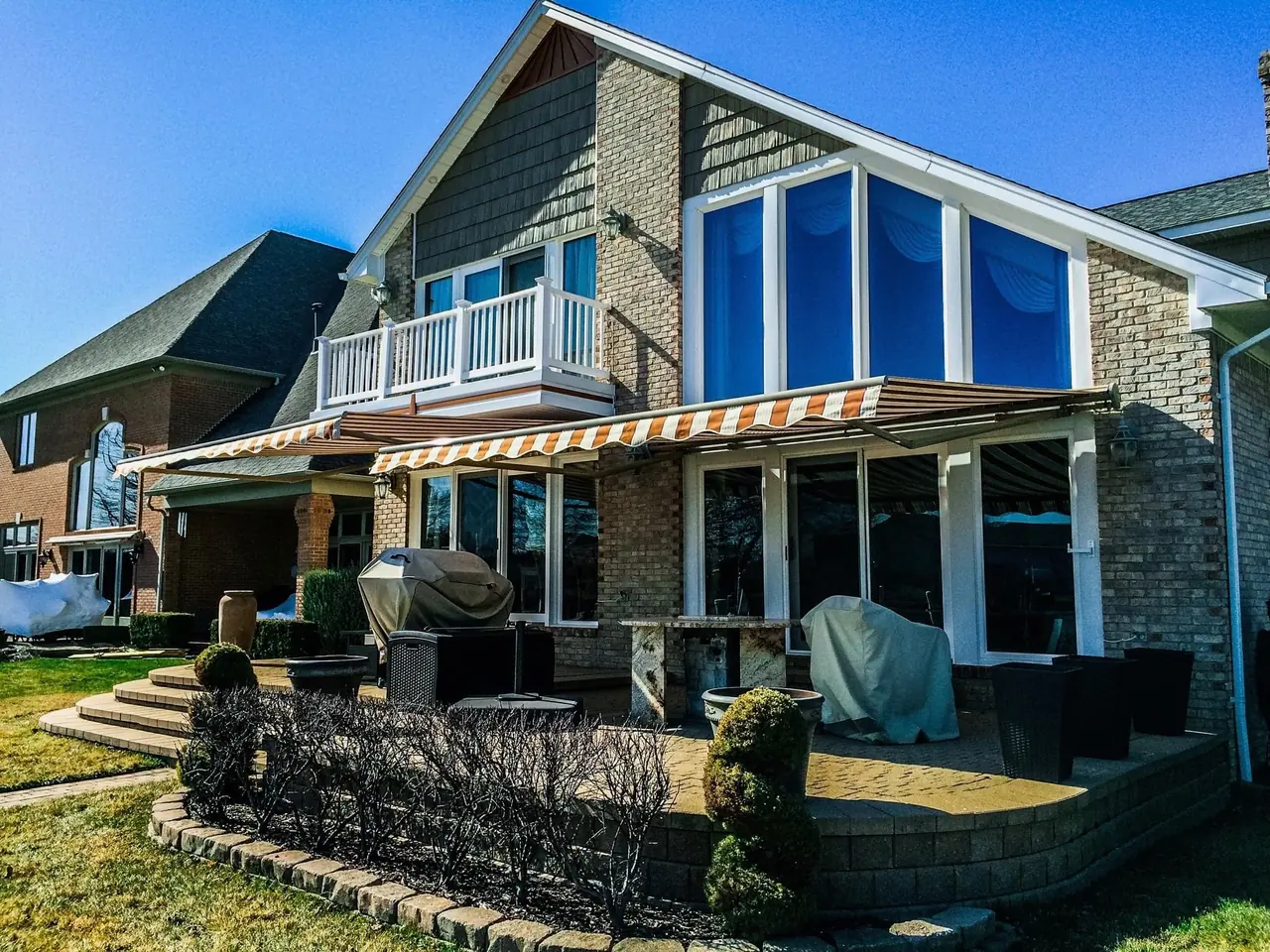
Shade on the sunny side of a two-story Connecticut home. West-facing exposures are the hardest to shade.
Why are west-facing windows so hard to shade?
In the morning the sun is high and to the east, and a modest overhang or tree can handle it. In the late afternoon the sun swings low into the west and shines almost horizontally into the room. A fixed roof overhang does little against a low sun, and the glass is already hot from hours of exposure. The Building America Solution Center notes that awnings shade well and keep the view open, but low-angle sun can slip past them, and that vertical attachments such as roller shades fully shade east- and west-facing windows where overhangs struggle.
That is the useful frame for the rest of this guide: west-facing glass needs something that sits right at the window, not just something above it. If you are also planning a patio or deck on that side of the house, our guide to sun angle and orientation for south-, west- and east-facing patios covers how the sun moves through the year.
How do exterior shades work on west-facing windows?
An exterior solar shade hangs outside the window or door and blocks heat and up to 97% of UV before it reaches the glass. Our exterior solar shades are motorized with Somfy motors, so you lower them from a remote instead of climbing a ladder. The fabric comes in three openness levels: 1% (97% UV block, densest weave and least view), 3% (95% UV block, the most popular choice for homes) and 5% (90% UV block, the most light and view). The manufacturer lists up to 80% less solar heat gain.
Because the heat is stopped outside, the room behind the shade stays cooler than it would behind an interior blind, and the shade fabric lets you keep a view of the yard or water. Hardware comes in white, grey, charcoal, black and bronze to match the house. For a longer treatment of fabrics, mounting and care, see our exterior solar shades guide.
Limits to know about: an exterior shade needs a place to mount, it is exposed to weather so it should be retracted in strong wind, and it costs more than an interior treatment. We measure and quote after a free on-site visit, so you will see the real number before you decide.
What does window film do, and what does it not do?
Window film is a thin coating applied to the glass. A good solar-control film cuts glare and UV and reduces the heat that comes through, and it asks nothing of you once it is on. That is its strength: no remote, no habit to build and no hardware outside the house.
Its limits are just as clear. Film is on the glass all year, so it also trims the winter sun you may want on a cold day, and you cannot lift it away for a clear view the way you can raise a shade. It also does nothing for a patio or porch. Before you commit, ask your window maker whether film affects the glass warranty, and look at the label of any film you consider for its solar heat gain coefficient, where a lower number means less heat gets through. Film is applied by a film installer, not by us, so we will not pretend to price it for you.
Where do interior shades fit?
Interior shades, blinds and drapes are the easiest option to add and the least expensive. The Building America Solution Center lists them as generally cheaper, easier to retrofit and protected from weather, with the widest range of light-filtering choices. Their weakness on a west wall is timing: by the time the sun reaches an interior shade it has already passed through the glass and turned into heat inside the room, and that heat is harder to send back out. Our guide to interior window treatments covers blinds, shades and shutters in more detail.
Interior shades are still the right answer in some cases: a condo or rental where nothing can be attached outside, a window that gets sun only for a short stretch, or a bedroom where blackout matters more than the view.
How do they compare side by side?
| Option | Where the heat is stopped | View and light | Seasonal flexibility | Best for |
|---|---|---|---|---|
| Exterior solar shade | Outside the glass, before the sun enters | View kept; openness of 1%, 3% or 5% sets how much | Raise it in winter or on cloudy days | Hot rooms, glare and fading on a west wall |
| Window film | On the glass surface | Slight tint; no way to open it up | Stays on all year | Windows where nothing can be mounted outside |
| Interior shade or blind | Inside the room, after the sun has entered | Wide range, from sheer to blackout | Open or close daily | Rentals, condos and bedrooms |
| Retractable awning | Above the window and the deck below it | Keeps the view; low sun can slip underneath | Retract for winter and storms | Deck and patio shade plus window shade |
The table is a starting point. Every house is different, which is why we look at the actual window before we recommend anything.
Which one should you choose?
- The room is too hot in the afternoon. An exterior shade is the strongest fix. Our guide to awnings, exterior shades and cooling costs explains the reasoning.
- Floors and furniture are fading. UV does most of the damage, and exterior shades block up to 97% of it. Read how that works in our guide to UV protection for furniture and floors.
- You mainly want less glare on a screen. Any of the three can work. A 3% or 5% exterior shade keeps more of the view, and a light interior shade is the cheapest test.
- Your building has rules about the exterior. Use interior shades or film, or check first with our permits and HOA guide.
- The sun problem is a patio, not a window. Use a screen or an awning. Solar mesh on a motorized retractable screen blocks up to 97% of UV, and a retractable awning adds a roof of shade. Not sure which? See solar shades vs retractable screens.
What about winter?
West-facing windows can be a friend in January, when afternoon sun is free heat. That favors anything you can raise or retract, which is why exterior shades and awnings suit Connecticut better than a permanent solution. The Building America Solution Center says that in cold climates south-facing windows should stay unshaded in winter to gain solar heat, while east and west windows can still add useful warmth. We take the heating-bill question in detail in do exterior shades cut winter heating bills?
Does this change near the shore?
Shoreline homes see more open sky and more reflected light off the water, which can make the west wall hotter, and salt air is hard on exposed hardware. Our East Lyme exterior solar shades page covers what we specify for coastal glass, and our page on motorized retractable screens in East Lyme covers the patio side of the same exposure. We also serve Stonington and the surrounding towns; see all of them on our service areas page, and browse more guides on our resources page.
Frequently asked questions
Which windows get the hottest sun?
West-facing windows get the strongest sun in the late afternoon, when the sun is low and the house has already warmed up. South-facing windows get the most sun overall but the high summer sun is easier to shade with an overhang.
Do exterior shades block the view?
Not completely. The fabric filters the sun while you keep your view of the outdoors. A 5% fabric lets in the most light and view, and a 1% fabric gives the most heat and privacy control with the least view.
Is window film better than an exterior shade?
They do different jobs. Film is on the glass year-round with no action from you, but you cannot raise it. An exterior shade stops heat outside the glass and can be raised in winter or on a cloudy day. Film also does nothing for a patio.
Can I combine an awning with a shade?
Yes. The Building America Solution Center notes that awnings shade well but low sun can slip past, and that adding a vertical shade helps. Many homes use an awning over the deck and shades on the glass behind it.
Should I leave exterior shades down in winter?
Not on windows where you want the free winter sun. Raise them on sunny winter days, and retract them before heavy snow, ice or strong wind. Our winter heating guide explains the trade-off.
Are your exterior shades motorized?
Yes. Our exterior solar shades are motorized with Somfy motors and operate from a remote. Ask at the estimate which controls fit your project.
Does film or a shade affect my window warranty?
We cannot answer that for your windows. Ask your window maker before you add film to the glass. For our products, ask for the exact warranty terms in your written quote.
How do I get a quote?
Call (860) 510-3862 or request a free on-site estimate. We measure the windows, show you fabric and color samples and give you a written quote. We will match a competitor’s written quote for the same brand, size and specs.
Too much afternoon sun?
Tom will visit, look at your west-facing windows or patio and tell you honestly which product fits. The estimate is free, and we will match a competitor’s written quote for the same brand, size and specs.
Or call (860) 510-3862