
Winter Planning · Energy
Do Exterior Shades Cut Winter Heating Bills?
Exterior shades are built to beat summer heat. What do they do when the heat is on inside and the snow is coming down outside? A straight answer for Connecticut homeowners.
Published November 2026
Short answer: Usually not. Exterior solar shades, awnings and screens are summer tools. Their best winter job is to be raised or retracted, so free sunlight can warm the house, and to stay safe from snow, ice and wind. Left down over a sunny south-facing window, a shade can actually block free solar heat. Real winter savings come from insulating interior window treatments used with the seasons, which are not what we sell, so we do not claim a heating benefit for our products.
It is a fair question. If an exterior shade can keep a hot room cooler in July, maybe it can keep a cold room warmer in January. The answer depends on what happens at a window in winter, and it is different from what happens in summer. This guide walks through it using the Building America Solution Center guide to window attachments and what we know about our own products.
Our products are sun-control products. We install exterior solar shades, motorized retractable screens and retractable awnings, and none of our product pages promise heating savings. That is deliberate, and this guide explains why.
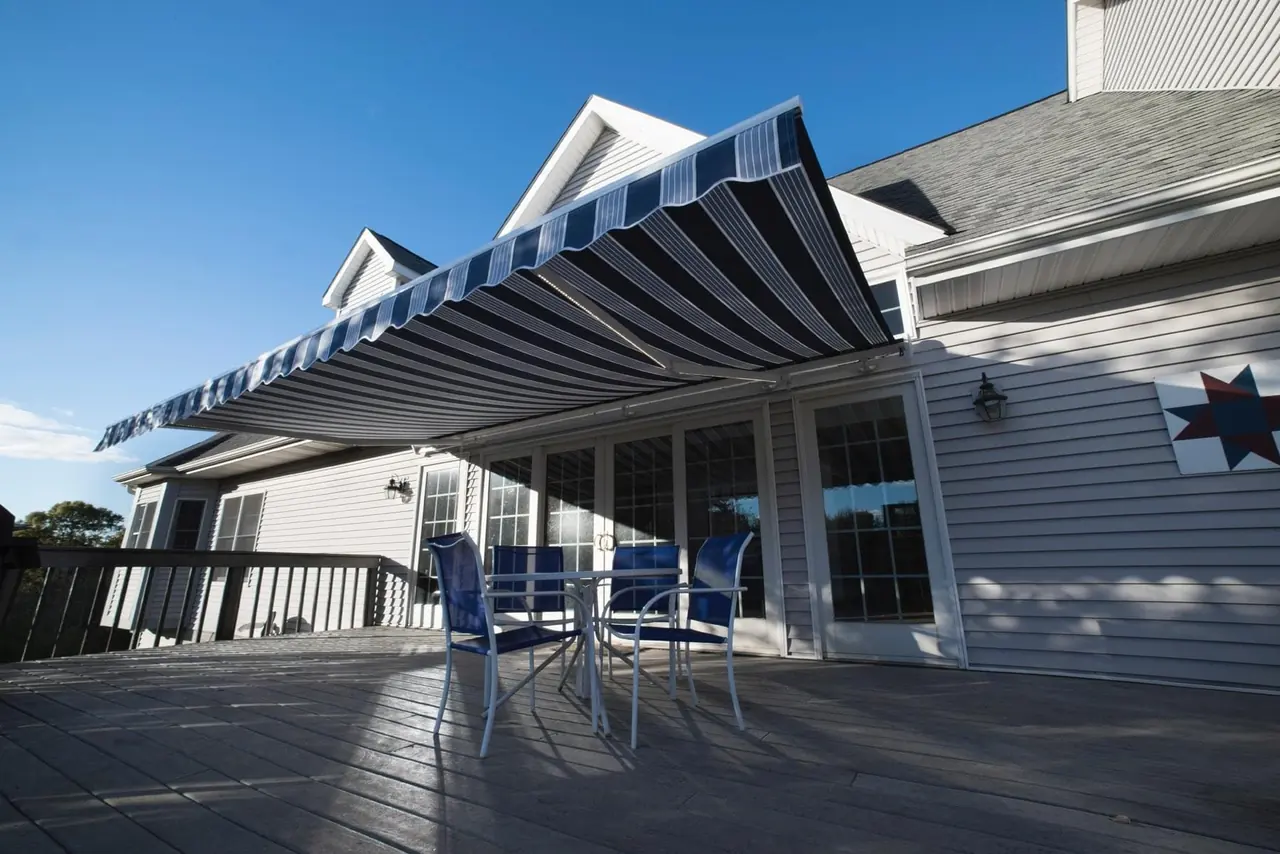
A retractable awning on a Connecticut home, shown before fall winterization.
What does a window do in winter?
A window does two things in winter. By day, sun shining through south-, east- and west-facing glass delivers free heat. By night, or on a gray day, the same glass loses heat to the cold outside. A good winter strategy lets the sun in when it is shining and puts something insulating over the glass when it is not.
The Building America Solution Center says the same in plainer terms: in cold climates, south-facing windows should stay unshaded in winter to gain solar heat, and east and west windows can still contribute useful warmth. It also notes that closed insulating shades reduce nighttime heat loss, though they can cause condensation or frost on the glass if they are closed against a cold window all the time.
So what should exterior shades do in winter?
The best winter setting for an exterior solar shade on a sunny window is up. A shade that blocks up to 97% of UV in summer will block a good deal of free winter sun if you leave it down. That is why the right habit with our exterior solar shades is to raise them on sunny winter days and lower them only when glare or fading is a problem.
Exterior shades are also exposed to weather, so retract them before heavy snow, ice or strong wind, and never force a frozen or stuck shade. Our guides on snow and retractable awnings and when to retract awnings and screens explain what to watch for.
Why do you not claim heating savings?
Because the numbers belong to a different product. The Building America Solution Center cites field studies that report whole-home winter heating savings of 12 to 14 percent, and summer cooling savings of 15 to 25 percent, from well-operated high-efficiency window shades. The key words are high-efficiency and well-operated: those figures describe insulating shades that are opened for sun and closed at night, not an exterior solar shade or an awning. Our fabrics are made for sun control, and we do not claim an insulating value for them.
If a company tells you an exterior shade or awning will cut your winter heating bill by a specific percentage, ask for the test that produced the number.
What is the right setting for each season?
| Situation | Exterior shade, awning or screen | Why |
|---|---|---|
| Hot summer afternoon, west-facing window | Lowered or extended | Blocks the heat before it reaches the glass |
| Sunny winter day, south-facing window | Raised or retracted | Lets free solar heat in |
| Winter night or very cold, gray day | Retracted; use an insulating interior shade or drapes if you have them | Closed insulating shades reduce nighttime heat loss |
| Snow, ice or strong wind forecast | Retracted | Protects the fabric, frame and motor |
| Spring cleanup | Inspect, rinse and test | Gets the system ready for the first hot week |
What about awnings and screens in winter?
A retractable awning is a patio product. It shades a deck and covers it in light rain, and in winter it should be retracted before snow or strong wind. A retractable screen is a bug, sun and wind product, and in the cold months it is usually rolled up too. Our guide to winterizing a retractable awning lists the steps. Neither product insulates the house. A wind mesh on a patio calms gusts at the patio, but it is not a way to heat the home.
The best time to prepare for next summer is actually winter, because installers book up. Our guide to spring lead times explains how ordering now helps.
What does help a winter heating bill?
For window treatments, the evidence points to insulating interior shades or drapes closed at night and open on sunny days, with south-facing glass left clear of exterior shading during the day. For everything else, such as insulation, air sealing and the heating system, a home energy assessment will tell you where your house loses the most heat. Those are outside what we do, and we would rather say so than sell you shade as a heating product.
What exterior shading can do is make the summer cheaper and more comfortable, which is the other half of the year. Our guide to awnings, exterior shades and cooling costs covers that side, and the west-facing windows guide compares your options for the hottest wall.
Does the shoreline change any of this?
Coastal winters bring wind and salt. If your patio sees the open bay, plan to retract screens and awnings early, and rinse salt off in spring. See how salt air affects awnings and screens. For shoreline homes in East Lyme, our East Lyme exterior solar shades page and the East Lyme motorized screens page describe what we specify. In Stonington and Pawcatuck, see our Stonington page and the Pawcatuck screens page. You can see every town on our service areas page and find more guides on our resources page.
Frequently asked questions
Do exterior shades save money in winter?
We do not claim that they do. They are sun-control products built for summer. In winter, the best use is to raise them on sunny days so free solar heat can come in, and to retract them before snow, ice or wind.
Should I leave exterior shades down in winter?
Not on windows where you want the sun. On a sunny south-facing window, keep the shade raised during the day. Lower it only if glare or fading is a problem, and retract it in heavy snow, ice or strong wind.
Can snow damage an awning or exterior shade?
Heavy snow, ice and strong wind are the conditions to avoid. Retract the awning, screen or shade before the storm, and do not force a stuck or frozen one. Our snow guide explains the details.
Which windows should stay unshaded in winter?
The Building America Solution Center says south-facing windows should stay unshaded in winter in cold climates to gain solar heat, and east and west windows can still contribute useful warmth.
Do retractable awnings lower heating bills?
No claim from us. An awning shades a deck and covers it in light rain, and it should be retracted in winter. It is not an insulating product.
Do insulating shades really cut heating costs?
The Building America Solution Center cites field studies that report winter heating savings of 12 to 14 percent from well-operated high-efficiency window shades. Results depend on the product and how it is used, and these figures are not for our exterior solar shades.
When should I get ready for next summer?
Late winter or early spring. Because every product is custom-built, it takes about 3 to 4 weeks from a signed quote to installation, and installers book up as the weather warms.
How do I get a free estimate?
Call (860) 510-3862 or request an estimate online. We visit, measure, show you samples and give you a written quote. We will match a competitor’s written quote for the same brand, size and specs.
Planning next summer’s shade now?
Tom will visit, look at your windows or patio and tell you honestly what will help. The estimate is free, and we will match a competitor’s written quote for the same brand, size and specs.
Or call (860) 510-3862