
Pergolas · Gazebos · Retractable Screens
Can You Add Retractable Screens to an Existing Pergola or Gazebo in Connecticut?
What works, what does not, and what to check on your pergola or gazebo before you order motorized retractable screens: structure, openings, mounting, wind, power and approvals.
Short answerUsually yes. Motorized retractable screens can mount between the posts of an existing pergola or gazebo if the structure has solid, plumb posts and a header or beam to hold the cassette, an opening no wider than a single unit allows, a level landing surface, and nearby power. Flimsy kit frames, open lattice with no beam and curved structures are the usual problems. Check the structure and approvals before you order.
Last updated: October 2026. Written by the Shoreline Shade team in Clinton, CT.
In this guide
- Can you add retractable screens to an existing pergola or gazebo?
- What should you check on your pergola or gazebo first?
- Which kinds of pergolas and gazebos work best?
- How do the screens mount to a pergola or gazebo?
- Which mesh makes sense under a pergola?
- Will wind be a problem for the structure?
- What about permits, associations and neighbors?
- When are retractable screens the wrong choice for a pergola or gazebo?
- What happens at the estimate?
- Frequently asked questions
- Wondering if your pergola can take screens?
Can you add retractable screens to an existing pergola or gazebo?
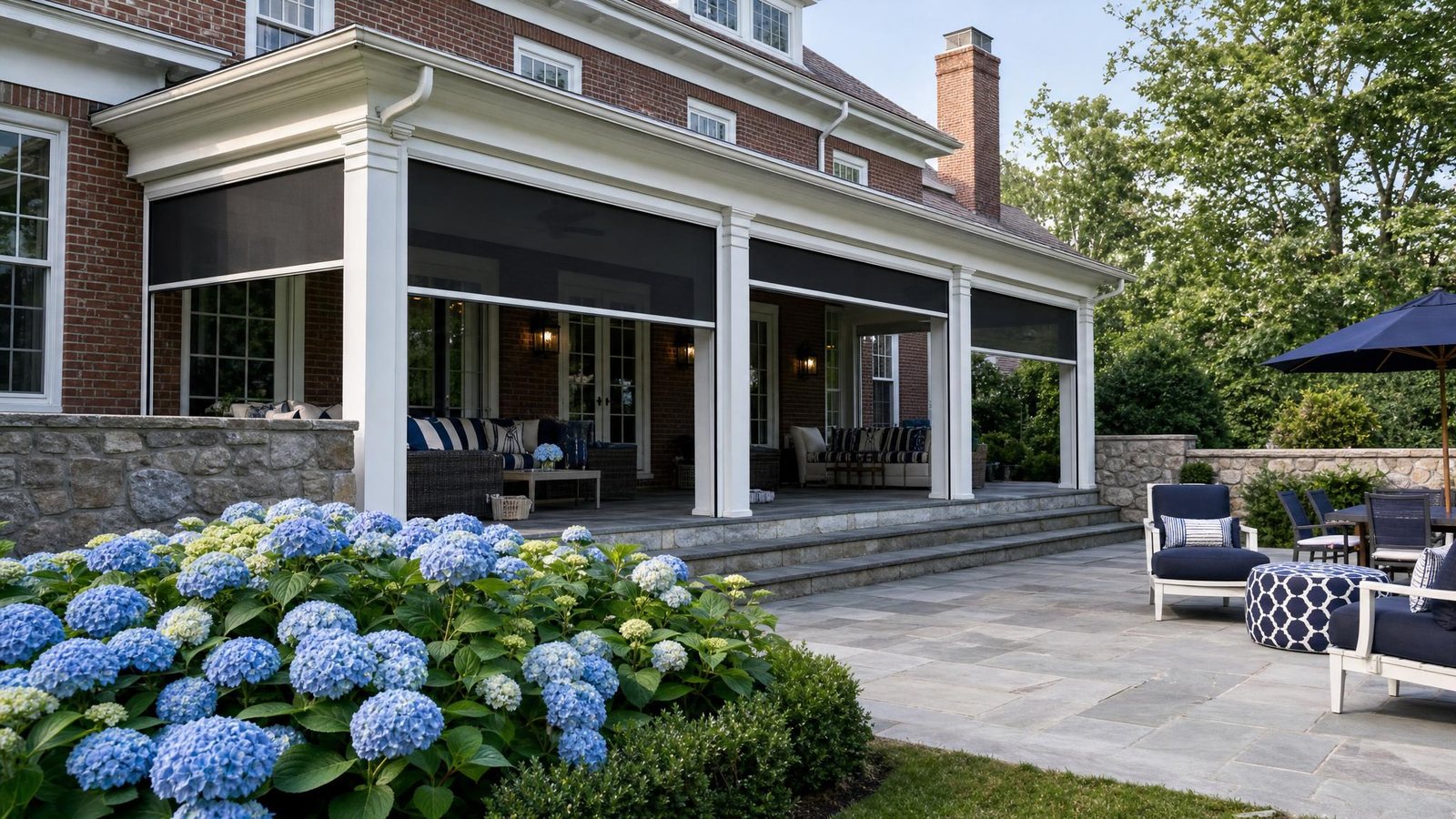
Often, yes. A motorized retractable screen is a cassette that mounts at the top of an opening, with tracks down each side and a weighted bottom bar. Our motorized retractable screens can mount between existing posts or columns, which is why they are a natural fit for covered patios, pergolas and gazebos. The catch is that the screen needs real structure to hang from and real structure to guide it, and not every pergola or gazebo has either.
We want to be clear about what we do and do not do. Shoreline Shade does not build or install pergolas or gazebos. We add retractable screens and awnings to structures that already exist. If you do not have a pergola yet, our posts on pergolas versus patio covers versus awnings and motorized louvered pergolas explain your options, but you would need a separate builder for the structure itself.
What should you check on your pergola or gazebo first?
Most failed pergola-screen projects fail because nobody checked the structure before ordering. Walk the structure with this list. If any answer is no or unsure, say so at the estimate.
- Are the posts solid and plumb? Screens run in side tracks, so a post that leans or wobbles makes the track lean too. Rot at the base of a wood post, loose post bases, and decking that has settled are common problems.
- Is there a beam or header at the top of the opening? The cassette that holds the screen mounts overhead. A pergola with open lattice or rafters but no continuous beam on the screen line gives the cassette nothing solid to attach to.
- Is the structure itself braced? A screen catches wind like a sail. A pergola designed only to hold up its own weight may flex sideways once screens are added.
- How wide is each opening? A single motorized screen unit is available in widths up to 25 feet, and wider openings can use multiple units side by side. Check the clear distance between posts, not the overall footprint.
- What is at the bottom? The bottom bar needs a reasonably flat, level landing surface, whether that is decking, pavers or concrete. Uneven stone or a stepped deck edge leaves gaps.
- Is power close? Our screen motors run on standard household current with a single low-voltage wire to the cassette, so a nearby outlet or a location where wiring can reach matters. Our guide to powering motorized awnings and screens goes into detail.
- Does the roof overhead leak? Water running down a post or off a leaking cover will stain mesh and collect in the bottom track.
Which kinds of pergolas and gazebos work best?
Structure type matters more than size. This table is a general guide only. Every structure is different, and the final answer comes after someone measures and looks.
| Structure | Likely fit for screens | What to check |
|---|---|---|
| Heavy timber pergola with a beam on each side | Often a good fit | Post condition, beam straightness, footings or post bases |
| Vinyl or aluminum kit pergola | Possible with care | Wall thickness of posts, whether they can take a screw-in attachment, wind flex |
| Open lattice or rafters, no continuous beam | Often needs added framing first | A solid header on the screen line |
| Louvered or adjustable-roof pergola | Depends on the model | Whether the maker allows add-on screens, and how they interact with the roof |
| Gazebo with solid roof and square posts | Often a good fit | Post spacing, roof edge as a mounting line, floor level |
| Octagonal or curved gazebo | Harder; screens run in straight lines | Each bay is a separate opening, and angled posts complicate tracks |
| Freestanding structure with slender posts | Needs a structural look first | Bracing, foundation, wind exposure |
How do the screens mount to a pergola or gazebo?
There are three common mounting methods for our motorized screens, and each one applies to a pergola differently.
Between posts or columns
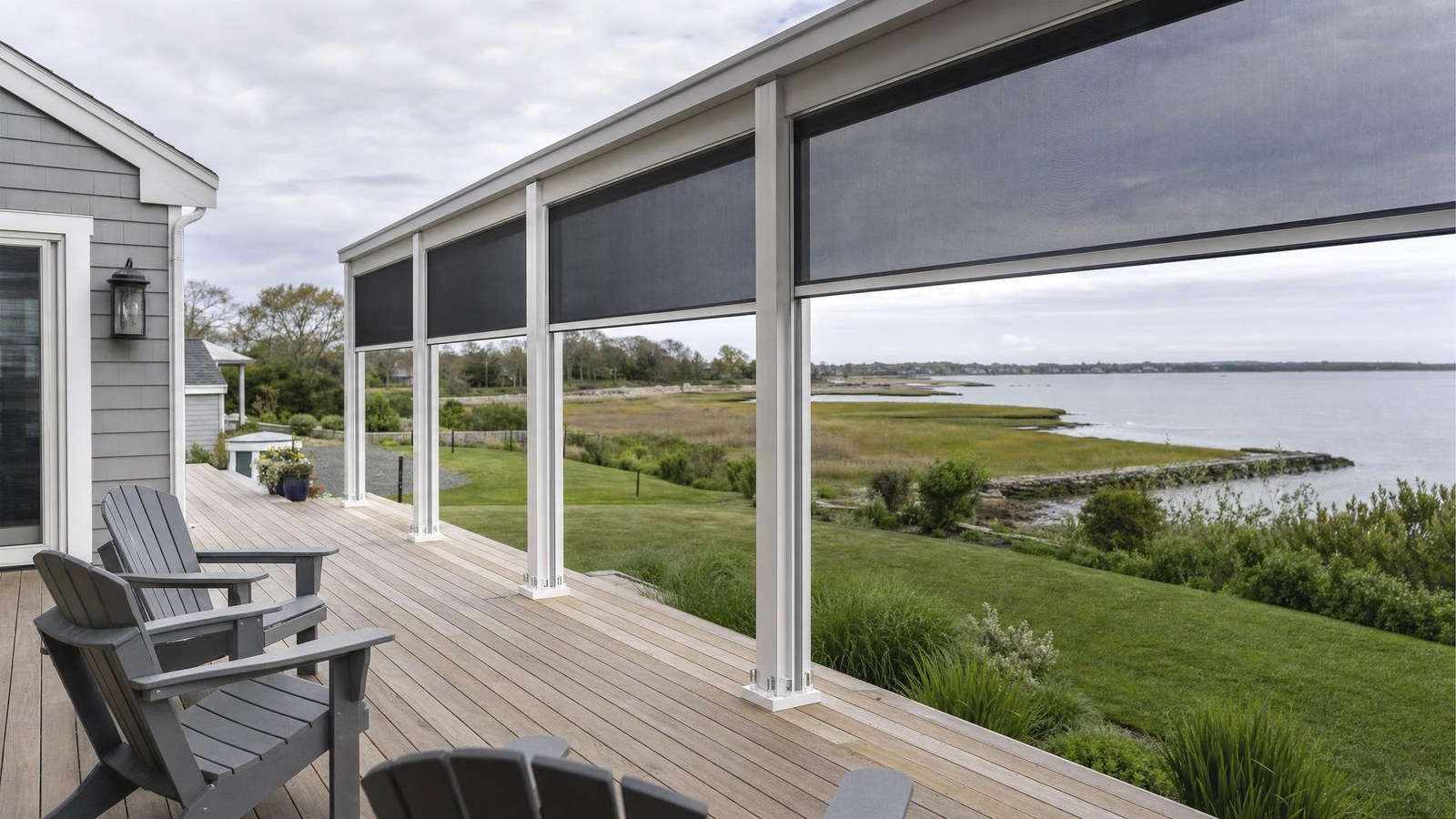
The most common pergola approach. The cassette sits between two posts, usually tucked up under a beam, and the tracks run down the inside faces of the posts. It makes for a clean, built-in look but depends on the posts being parallel and the opening square.
Surface mount
The cassette is fastened to the face of a beam or header. This is the most common and versatile method in general, and it is useful when the opening is not perfectly square because the housing can sit proud of the structure and hide a little irregularity.
Recessed
The cassette is recessed into the ceiling or header for a hidden look. It is best for new construction or remodels, so on an existing pergola it is usually only practical when there is already a deep enough beam, or the pergola is being rebuilt anyway.
Want a firm number for your home?
Which mesh makes sense under a pergola?
A pergola roof provides partial shade overhead, but it does little against low sun coming in from the side or against bugs. Screens address both. Our mesh choices are:
- Insect mesh (standard): blocks about 90% of insects with maximum visibility and airflow. It is the usual choice for a pergola that backs onto garden beds or wet areas.
- Solar mesh: blocks up to 97% of UV and cuts heat and glare. It is useful on the west side, where late sun comes in under the pergola roof.
- Privacy mesh: a denser weave that gives daytime obscurity while passing light and air.
- Wind mesh: a heavier mesh that reduces gusts by up to 65%, but note the structure must handle the wind it catches.
For bug control specifically, Connecticut’s Mosquito Management Program reminds homeowners that screens do not replace removing standing water, and our own mosquito protection guide covers realistic expectations.
Will wind be a problem for the structure?
It can be, and this is the part most pergola owners underestimate. A pergola open to air passes wind through. Once you hang a full-height screen on the sides, wind pushes on the mesh and the load goes into the posts and their foundations. Our screens are rated for moderate wind. Optional wind sensors retract the screen automatically, and heavier wind mesh is available. None of that makes the screen a storm barrier.
The question to ask is whether your posts and their base connections were built to handle sideways loads. Many decorative pergolas were not. Read the physics of porous barriers in our guide to windbreak screens in Connecticut, and the plain-language wind material from the National Weather Service on wind safety. Then plan to retract the screens before strong wind, as described in when to retract an awning or screen.
What about permits, associations and neighbors?
Adding screens to a structure can trigger different rules than the structure did. Some towns treat the addition of enclosing walls differently, and associations often review exterior changes regardless of size. The State Building Code is overseen by Connecticut’s Office of the State Building Inspector, and your local building official makes the call for your address. We could not confirm from public sources a single statewide exemption that fits every pergola screen, so ask your town before you order. Our permits and HOA guide lists what to ask, and we can supply drawings.
Also consider screen rooms. A fixed screen room is a different construction project than a retractable screen on a pergola. We compare them in screen rooms vs retractable screens.
When are retractable screens the wrong choice for a pergola or gazebo?
If the posts are rotted, the structure is racked, there is no solid header to hang a cassette from, or the pergola was never designed to carry wind loads, the first step is repairing or reinforcing the structure, not buying screens. If the structure is curved or has many small bays, a screen on each bay may cost more than it is worth. If you need a fully enclosed, weather-tight, heated room, a retractable screen is the wrong tool altogether. We will say so at the estimate.
If your pergola is a decorative frame with thin posts, a better idea may be freestanding screen panels, plants, or an awning on the house wall instead. A retractable awning attached to the house, as described in the retractable awning buying guide, may also give more shade than the pergola roof ever will.
What happens at the estimate?
Our free estimate includes on-site measurements of your actual openings, a look at the structure and an honest conversation about what will and will not work. Tom Magnoli brings fabric swatches and mesh samples so you can see how each looks against your posts. You get a clear quote with no obligation. Bring photos of the pergola if you are shopping before a visit, along with any manual or maker information if it is a kit.
We serve all of Connecticut. Pergolas and covered patios are common in towns such as Ridgefield, Madison and New Canaan. See all our retractable screen options or request an estimate below.
Frequently asked questions
Can retractable screens be installed on an existing pergola?
Often yes, if the pergola has solid posts and a header or beam to hold the cassette. Screens mount between posts or on the face of a beam. Thin, wobbly or open-lattice structures may need reinforcing first. Shoreline Shade adds screens to existing structures but does not build pergolas.
Can you put retractable screens on a gazebo?
Usually yes for a square or rectangular gazebo with a solid roof and sturdy posts. Octagonal or curved gazebos are harder, because each bay is a separate opening and screens run in straight tracks. A measurement visit settles whether it makes sense and what it would take.
How wide can a motorized retractable screen be?
A single unit is available up to 25 feet wide. Wider openings can use multiple units installed side by side with minimal gaps. Always measure the clear distance between posts, since the opening width, not the outer footprint of the pergola, decides what fits.
Will a retractable screen survive wind on a pergola?
Our screens are rated for moderate wind and can add a wind sensor, but they are not storm barriers. The pergola posts and their foundations must handle the load the mesh catches. Retract the screens before strong wind, and have the structure checked if it flexes.
Do I need to power the screens from the house?
The motors run on standard household current with a single low-voltage wire to the cassette, so a nearby outlet or wiring route matters. A freestanding pergola may need power run to it. Ask about the details for your model and consult an electrician where required.
Which mesh should I choose for a pergola?
Insect mesh blocks about 90% of insects with the best visibility. Solar mesh blocks up to 97% of UV and cuts glare, which helps with low sun. Privacy mesh adds daytime obscurity, and wind mesh reduces gusts by up to 65%. Many owners choose by side of the structure.
Do I need a permit to put screens on a pergola in Connecticut?
It varies by town and by how the screens attach. Some towns and associations review additions that enclose or alter a structure. Ask your local building official before ordering, and check association rules. We can provide drawings, and our permits and HOA guide lists the questions to ask.
What if my pergola is not strong enough for screens?
Strengthening the structure comes first, either by adding bracing or a solid header or by rebuilding. We do not build pergolas, so a carpenter or contractor would handle that. Once the frame is sound, we can quote screens, or suggest an awning on the house wall if that suits better.
Wondering if your pergola can take screens?
Tom Magnoli will measure your openings, look at the structure and tell you honestly whether retractable screens will work, at no cost for the estimate.
Or call (860) 510-3862